Concerts are more than just music; they are immersive experiences that captivate audiences through a combination of sound, visuals, and atmosphere. While great music is essential, lighting plays a crucial role in setting the mood, directing attention, and enhancing the overall impact of a performance.
In this blog, we’ll explore why lighting is so important at concerts, the different types of lighting used, and how to use them effectively to create unforgettable live shows.
Why Is Lighting So Important at Concerts?
Lighting is a fundamental element of stage production, transforming a performance from ordinary to extraordinary. Here’s why it matters:
Enhances Mood and Emotion
Lighting can dramatically influence how a song is perceived. Soft, warm lighting can make a ballad feel intimate and emotional, while intense strobe effects and rapid color changes can heighten the excitement of a fast-paced rock anthem.
Directs Audience Attention
Concert lighting helps guide the audience’s focus to key moments and performers. Spotlights highlight solos, moving heads track artists, and color shifts signal changes in mood or song sections. Without proper lighting, important moments may go unnoticed.
Adds Depth and Dimension to the Stage
Good lighting design prevents a concert from looking flat. By layering different types of lights—such as front, side, and back lighting—stages appear larger and more visually engaging.
Creates a Unique Visual Identity
Every concert has a theme or artistic direction. Lighting plays a huge role in reinforcing this identity, whether it’s through a specific color palette, custom gobo projections, or synchronized effects that match the performance’s energy.
Engages the Audience
A well-lit show pulls the audience into the experience. Lighting effects like audience-facing beams, pulsing strobes, and interactive elements make concertgoers feel like an integral part of the performance.
Types of Lighting Used in Concerts
Different types of lights serve different purposes at a concert. A successful lighting design uses a combination of these fixtures to create a dynamic and visually compelling show.
Moving Heads
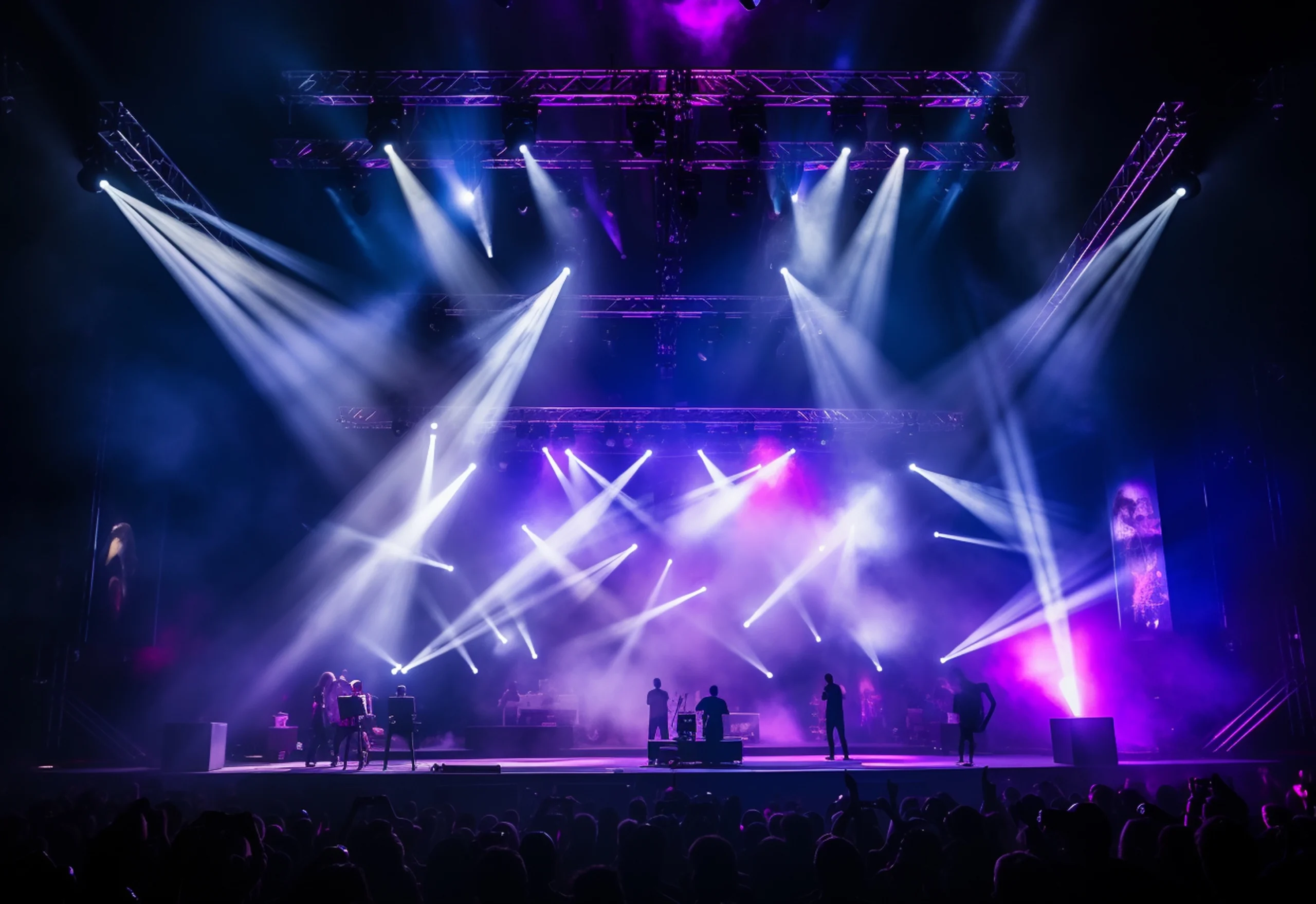
Moving heads are the backbone of modern concert lighting. These versatile fixtures can pan, tilt, change colors, and project patterns, making them ideal for high-energy performances. They are categorized into:
- Spot Moving Heads – Produce focused beams with sharp edges, often used for highlighting performers.
- Wash Moving Heads – Provide broad, diffused lighting to cover large areas with smooth color.
- Beam Moving Heads – Create narrow, intense beams that cut through haze for dramatic effects.
- Hybrid Moving Heads – Combine spot, wash, and beam features for maximum flexibility.
For a more detailed description, see the blog “The Power of Moving Heads: Taking Concert Lighting to a New Level“
PAR Cans (Parabolic Aluminized Reflector Lights)
PAR cans are traditional stage lights that produce a fixed beam. They are often used for general stage lighting and color washes, either in LED or halogen form.
LED Fixtures
LED lights have revolutionized concert lighting due to their energy efficiency, color versatility, and durability. They can be used for stage washes, pixel mapping, and even strobe effects.
Strobe Lights
Strobe lights create rapid flashes of light, producing a high-energy effect that syncs well with fast-paced music. They are commonly used in electronic dance music (EDM) and rock concerts.
Follow Spots
Follow spots are manually controlled spotlights used to track performers as they move across the stage. These lights ensure that key band members or soloists are always visible.
Blinders
Blinders are bright lights aimed at the audience, used to create moments of intensity, particularly during climactic parts of a performance.
Haze and Fog Machines
While not lights themselves, haze and fog machines enhance lighting effects by making beams and patterns more visible. They create a sense of depth and atmosphere that adds to the visual impact of a show.
How to Use Concert Lighting Properly
A well-executed lighting setup requires thoughtful planning and execution. Here’s how to use concert lighting effectively:
Plan Your Lighting Design in Advance
Before the concert, work with lighting designers to create a detailed lighting plan. Consider the venue’s size, stage layout, and the mood you want to achieve for each song. A good lighting plan ensures smooth execution on the day of the event.
Match Lighting to the Music
Great lighting isn’t just about brightness—it’s about storytelling. Sync lighting changes with the rhythm, tempo, and emotion of each song. Slow fades work well for ballads, while quick flashes and strobes heighten the intensity of fast-paced tracks.
Use Color to Set the Mood
Different colors evoke different emotions:
- Blue & Purple – Calm, melancholic, dreamy.
- Red & Orange – Passionate, intense, aggressive.
- Green – Energetic, fresh, vibrant.
- White – Clean, classic, high contrast.
By selecting the right colors, you can influence how the audience feels during each song.
Balance Brightness and Contrast
Avoid overloading the stage with too much light, as it can wash out performers and visuals. A balance of bright highlights and darker areas creates contrast, making lighting effects more impactful.
Layer Your Lighting for Depth
Using a mix of front, side, and backlighting prevents the stage from looking flat. Combining different angles and intensities adds depth and dimension to the performance.
Use Movement Wisely
While moving heads add excitement, too much movement can be distracting. Use slow, sweeping movements for emotional moments and rapid, sharp movements for high-energy sections. A well-timed pan or tilt can make all the difference.
Engage the Audience with Lighting Effects
Concert lighting shouldn’t just focus on the stage—engaging the audience enhances their experience. Directing beams into the crowd, using pulsating effects, and incorporating audience-facing strobes can make them feel like part of the show.
Test and Rehearse Before the Show
Running a full lighting rehearsal ensures that all cues, transitions, and effects are perfectly timed. Testing in advance helps prevent technical issues and allows for last-minute adjustments.
The Future of Concert Lighting
Concert lighting technology continues to evolve, bringing new possibilities to live shows. Some trends shaping the future include:
Smart & Automated Lighting Systems
AI-powered lighting systems are becoming more common, allowing for real-time adjustments based on the music, audience movement, and stage action.
Augmented Reality (AR) & Projection Mapping
Projection mapping and AR integration are pushing the boundaries of stage visuals, blending physical lighting with digital effects for next-level performances.
Energy-Efficient & Eco-Friendly Lighting
With sustainability in mind, more venues and artists are adopting energy-efficient LED lighting and solar-powered setups to reduce their environmental footprint.
Wireless & Remote-Controlled Lighting
Wireless DMX systems allow for greater flexibility, reducing the need for excessive cabling and enabling seamless lighting control from remote locations.
Conclusion: Lighting Is the Heart of Concert Experiences
Concert lighting is not just about visibility—it’s about creating emotion, energy, and unforgettable moments. When used correctly, lights can transform a simple performance into a mesmerizing spectacle that leaves a lasting impact on the audience.
By carefully planning lighting design, choosing the right fixtures, and syncing effects with the music, concert organizers can elevate their shows to new heights.The next time you attend a concert, take a moment to appreciate the magic of the lights—it’s what makes the music truly come alive.