The evolution of live music has always been intertwined with technological advancement. As we move through 2025, the pursuit of perfect sound for concert experiences has reached unprecedented heights. Modern audiences expect crystal-clear audio that captures every nuance of their favorite artists’ performances, and the industry has responded with groundbreaking innovations that transform how we experience live music.
Creating exceptional sound for concert venues requires a sophisticated understanding of acoustics, electronics, and human perception. Today’s audio engineers combine traditional knowledge with cutting-edge technology to deliver immersive sonic experiences that resonate with audiences long after the final encore.
Understanding Acoustic Principles in Modern Venues
The foundation of excellent sound for concert production begins with understanding how sound waves interact with physical spaces. Every venue presents unique challenges, from the reflective surfaces of indoor arenas to the open-air dispersion patterns of outdoor amphitheaters. Modern acoustic analysis tools allow engineers to map these environments with remarkable precision, identifying potential problem areas before a single speaker is placed.
Reverberation time, early reflections, and standing waves all play crucial roles in determining how sound reaches audience members. Advanced modeling software now enables engineers to simulate these factors virtually, optimizing speaker placement and system configuration before physical installation begins. This predictive approach significantly reduces setup time while improving overall audio quality.
The materials used in venue construction dramatically impact acoustic performance. Concrete, glass, and metal surfaces create distinct reflection patterns that must be addressed through careful system design. Many venues now incorporate acoustic treatment panels and variable absorption systems that can be adjusted based on the specific requirements of each event.
Line Array Technology and Its Evolution
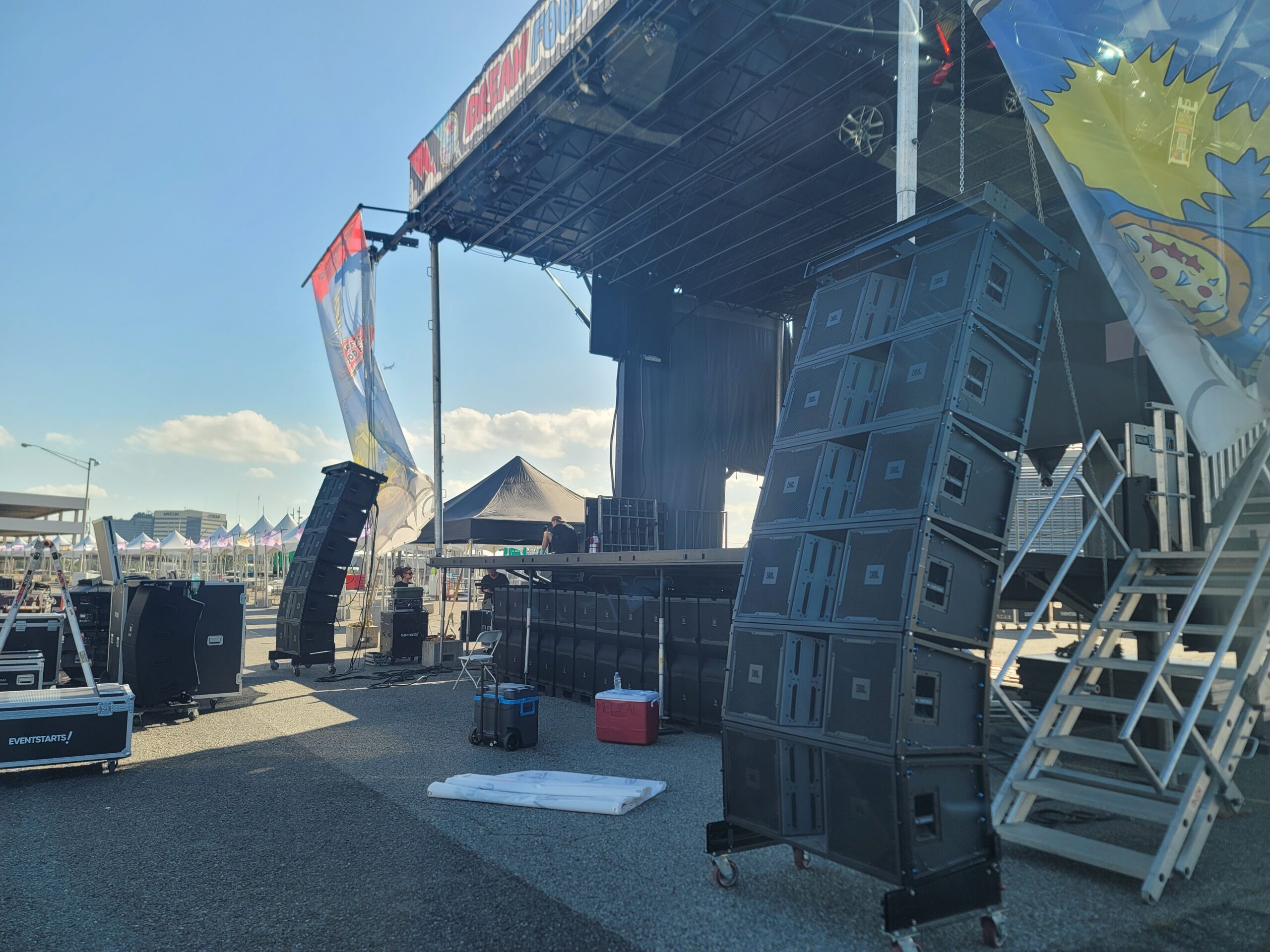
Line array speaker systems have revolutionized sound for concert applications over the past two decades. These vertically arranged speaker clusters create a coherent wavefront that travels farther with less energy loss than traditional point-source systems. The physics behind this technology allows for precise coverage control, ensuring consistent audio quality throughout large venues.
Modern line arrays incorporate sophisticated digital signal processing that enables real-time optimization. Individual drivers can be adjusted independently, compensating for environmental factors and creating virtual coverage patterns that would be impossible with analog systems. This flexibility has made line arrays the preferred choice for touring productions and permanent installations alike.
The latest generation of line array systems features lighter materials and more efficient amplification, reducing transportation costs while increasing output capabilities. Carbon fiber enclosures and neodymium magnets have become standard in premium systems, allowing for powerful performance from surprisingly compact packages.
Digital Signal Processing Breakthroughs
Digital signal processing represents perhaps the most significant advancement in modern concert audio. These systems can analyze incoming audio signals thousands of times per second, applying corrections that were unimaginable just a decade ago. From eliminating feedback to compensating for room anomalies, DSP has become indispensable in professional sound reinforcement.
Artificial intelligence has entered the sound for concert equation, with machine learning algorithms that can predict and prevent problems before they affect the audience experience. These systems learn from each performance, continuously improving their ability to deliver optimal sound quality regardless of venue conditions or artistic requirements.
Network-based audio distribution has replaced traditional analog cabling in many applications. Protocols like Dante and AES67 allow for flexible routing of hundreds of audio channels over standard ethernet infrastructure. This approach simplifies installation while providing redundancy and diagnostic capabilities that enhance system reliability.
Subwoofer Integration and Low-Frequency Management
The reproduction of low frequencies presents unique challenges in live sound reinforcement. Bass waves are omnidirectional and can interact destructively with room boundaries, creating uneven coverage patterns. Modern subwoofer arrays address these challenges through careful placement and sophisticated processing techniques.
Cardioid subwoofer configurations have become increasingly popular, using phase manipulation to direct bass energy toward the audience while reducing sound levels on stage. This approach improves clarity for performers and reduces feedback potential, particularly important for genres that rely heavily on low-frequency content.
Time alignment between subwoofers and main speaker arrays requires precise measurement and adjustment. Modern analysis tools can identify arrival time differences with sub-millisecond accuracy, enabling engineers to create seamless integration across the entire frequency spectrum.
Immersive Audio Experiences
The concept of immersive audio has transformed expectations for live sound. Object-based mixing systems allow engineers to place sounds precisely within a three-dimensional space, creating experiences that transcend traditional stereo presentations. Artists are embracing these capabilities to create shows that envelop audiences in sound.
Implementing immersive sound for concert environments requires additional speaker positions and sophisticated control systems. Overhead arrays, side fill speakers, and distributed systems work together to create a cohesive soundscape that responds dynamically to the artistic content. The technical complexity is significant, but the results justify the investment.
Consumer familiarity with spatial audio through headphones and home theater systems has raised expectations for live events. Audiences now anticipate the same dimensional qualities they experience in other media, driving continued innovation in concert audio technology.
Environmental Considerations and Noise Management
Modern concert production must balance artistic requirements with environmental responsibility. Noise regulations have become increasingly stringent, particularly for outdoor venues near residential areas. Advanced directional speaker technologies help concentrate sound where it’s needed while minimizing spillover into surrounding communities.
Real-time monitoring systems track sound levels at multiple points throughout and beyond venue boundaries. These measurements ensure compliance with local regulations while providing data for continuous system optimization. Automated limiting systems can adjust output levels dynamically to maintain consistent coverage without exceeding permitted thresholds.
The industry has also embraced sustainability in equipment design. Energy-efficient amplifiers reduce power consumption while maintaining performance specifications. Recyclable materials and extended product lifecycles reflect the sector’s commitment to reducing environmental impact without compromising audio quality.
The Future of Concert Sound Technology
Looking ahead, the trajectory of concert audio technology suggests even more remarkable developments. Research into new transducer designs promises improved efficiency and frequency response. Beam-forming arrays that can direct sound to specific audience areas without physical repositioning are already in development.
Integration with visual and environmental systems will create truly unified production platforms. Imagine sound systems that respond automatically to lighting cues or audience density, adjusting coverage patterns in real-time to optimize every attendee’s experience. These capabilities are closer to reality than many realize.
The science of perfect sound for concert experiences continues to evolve, driven by artistic ambition and technological innovation. As we progress through 2025 and beyond, audiences can expect live music experiences that surpass anything previously possible, bringing them closer to the music they love.