Single Wide LED Wall for Immersive Impact
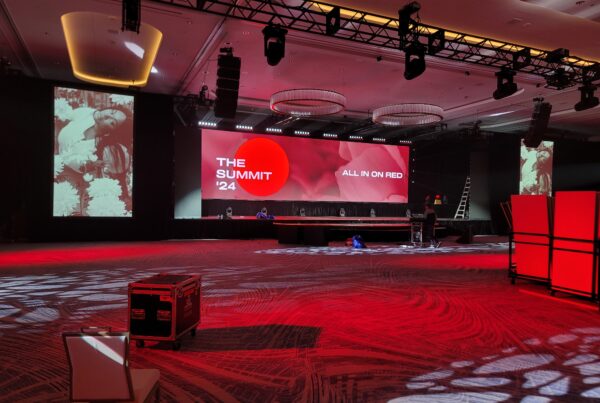
One of the most common and visually striking layouts is a single wide LED wall spanning the entire back of the stage. This layout works well for concerts, corporate events, and award shows because it provides a continuous canvas for visuals. A wide LED backdrop allows designers to create panoramic imagery, seamless video content, and synchronized graphics that fill the audience’s field of view.
Key considerations for this layout:
-
Screen height should balance visibility with performer sightlines.
-
Modular panels can be used to scale width for different venue sizes.
-
High brightness panels are essential in brightly lit environments.
-
Integration with stage lighting ensures performers remain visible without washing out the LED content.
Using a single wide LED wall is one of the most effective LED backdrop stage design strategies for creating immersive audience experiences.
Layered LED Panels for Depth and Dimension
Layered or staggered LED panels add visual depth to the stage by creating multiple planes of content. Panels can be offset horizontally or vertically, producing a 3D effect that adds interest even when content is static. This layout is particularly effective for dynamic shows where lighting and visual content interact in real time.
Benefits of layered layouts:
-
Creates a sense of depth and immersion for the audience.
-
Allows content to appear “in front of” or “behind” performers without physical props.
-
Facilitates visual separation for multi-screen storytelling or product demos.
Careful rigging and calibration ensure uniform brightness and color, making this a strong LED backdrop stage design option for modern productions.
LED Columns and Vertical Towers
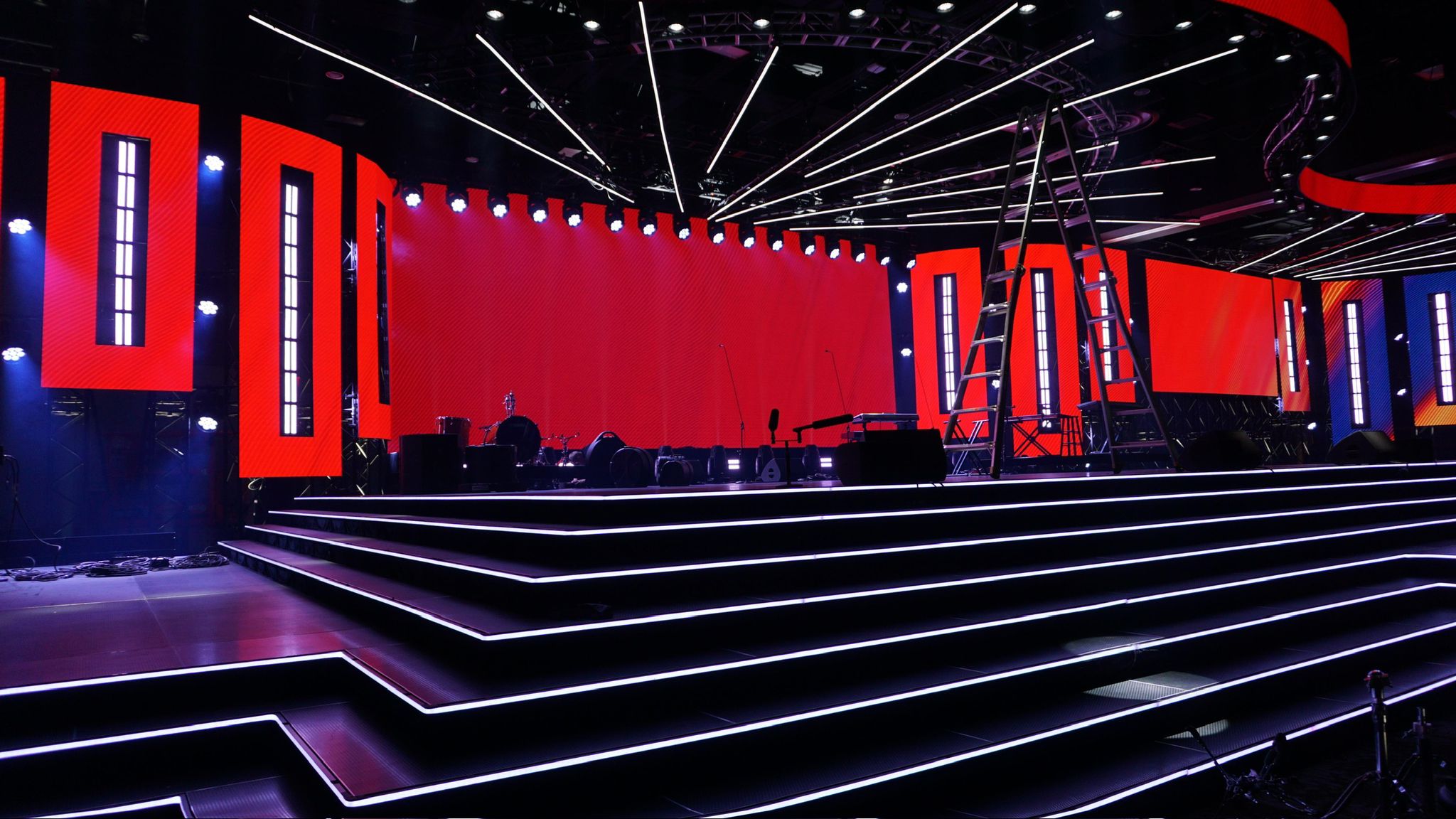
Vertical LED columns or towers are ideal for narrow stages or venues with height limitations. These layouts provide strong vertical visual elements that can act as framing devices for performers or products. Columns can also be animated individually to produce cascading effects that complement the main LED wall.
Practical considerations include:
-
Ensuring columns are spaced evenly to avoid visual gaps.
-
Matching brightness and pixel pitch with other LED elements on stage.
-
Using side towers for audience engagement in wider venues.
Incorporating vertical towers is an innovative way to enhance LED backdrop stage design for trade shows, conferences, or concerts with limited horizontal space.
Curved LED Walls for Immersive Environments
Curved LED walls create a wraparound effect, drawing the audience into the content. They are particularly effective for immersive concerts, experiential marketing events, and product launches. The curvature of the wall enhances the perception of depth and creates a more engaging visual experience.
Tips for designing curved LED backdrops:
-
Determine optimal curve radius to maintain image clarity across panels.
-
Use media servers capable of warping content to fit the curve.
-
Position front stage lighting carefully to avoid reflections and hotspots.
-
Test sightlines from multiple audience angles to ensure no distortion occurs.
Curved layouts elevate audience engagement and are increasingly sought after in LED backdrop stage design.
Modular Multi-Screen Layouts
Modular layouts involve using multiple LED panels of varying sizes to create a custom stage design. These can include a combination of horizontal walls, vertical columns, riser LED floors, or ceiling-mounted elements. This flexible approach allows designers to craft stages that are unique to each performance or brand activation.
Advantages of modular layouts:
-
Easily adjustable for venues of different sizes.
-
Supports layered content and multiple visual zones.
-
Allows for creative storytelling, such as dynamic content that moves between panels.
-
Simplifies maintenance, as individual panels can be replaced without affecting the entire backdrop.
Modular design offers one of the most versatile LED backdrop stage design solutions for corporate launches, multi-act concerts, and hybrid events.
Integrated LED Floors and Catwalks
LED backdrops are often paired with LED floors or catwalk extensions to create continuity across the stage. This layout turns the entire performance area into a cohesive visual environment. Patterns, animations, and video content can flow from the backdrop onto the floor, creating immersive pathways for performers or products.
Best practices include:
-
Using reinforced, non-slip LED panels for safety.
-
Matching pixel pitch to the backdrop for seamless visuals.
-
Planning for performer placement and weight load on LED surfaces.
-
Syncing animations across floor and backdrop for fluid transitions.
LED floors and catwalks add a multi-dimensional element to LED backdrop stage design, enhancing audience immersion.
Split Stage Layouts for Multiple Acts or Presenters
For events with multiple performers, presenters, or speakers, split stage layouts provide separate LED zones. Each zone can have its own content, lighting cues, and live feeds, making transitions smoother between acts.
Key points for split stage layouts:
-
Clearly define zones with physical spacing or LED panel separation.
-
Use independent media servers to control content for each zone.
-
Ensure consistent brightness and color calibration across all sections.
-
Coordinate lighting to prevent visual interference between zones.
Split-stage layouts are ideal for large events where multiple presenters need distinct yet visually unified spaces, enhancing LED backdrop stage design versatility.
LED Backdrops with Interactive or Live Content
Interactive stages are increasingly popular. LED backdrops can display live social media feeds, real-time visuals responding to audience input, or motion-captured performer effects. Combining interactive features with an optimized stage layout can dramatically elevate engagement.
Tips for interactive LED backdrops:
-
Position sensors or cameras strategically to detect performer or audience movement.
-
Use high refresh rate panels to ensure smooth real-time visuals.
-
Integrate software platforms that allow live content updates without disrupting the show.
-
Ensure cabling and network systems can handle the data load for live feeds.
Interactive features are a cutting-edge addition to modern LED backdrop stage design for product launches and hybrid conferences.
Optimizing Sightlines and Viewing Angles
No matter the layout, sightline planning is essential. Poor placement can leave parts of the audience with obstructed views or distorted visuals.
Best practices:
-
Ensure main panels are visible from the furthest seats.
-
Consider vertical offsets for layered or stacked LED panels.
-
Avoid excessive height that places content out of comfortable viewing range.
-
Test layouts using CAD or previsualization software to anticipate audience perspective.
Optimizing sightlines is critical to ensure that all attendees experience the intended impact of the LED backdrop stage design.
Balancing LED Backdrops with Stage Lighting
Even the best LED stage layout can be compromised if lighting is not carefully integrated. Stage lights can either complement LED content or overpower it.
Key tips:
-
Adjust lighting intensity to avoid washing out LED visuals.
-
Use gels or programmable lighting to match content colors.
-
Plan dynamic cues so lighting and LED content enhance each other rather than compete.
-
Coordinate rigging to prevent physical interference with LED panels.
Lighting coordination ensures the LED wall remains the focal point of the LED backdrop stage design.
Scalable Designs for Touring or Multi-Venue Events
Many productions require LED backdrops to adapt to multiple venues. Scalable layouts allow modular panels, columns, or curved segments to be added or removed as needed.
Benefits include:
-
Quick reconfiguration between venues.
-
Reduced shipping and setup costs by using standard panel sizes.
-
Consistent visual quality across events.
-
Ability to scale both horizontally and vertically depending on space limitations.
Scalable designs are a must-have for touring concerts, corporate roadshows, and multi-venue productions, ensuring effective LED backdrop stage design every time.