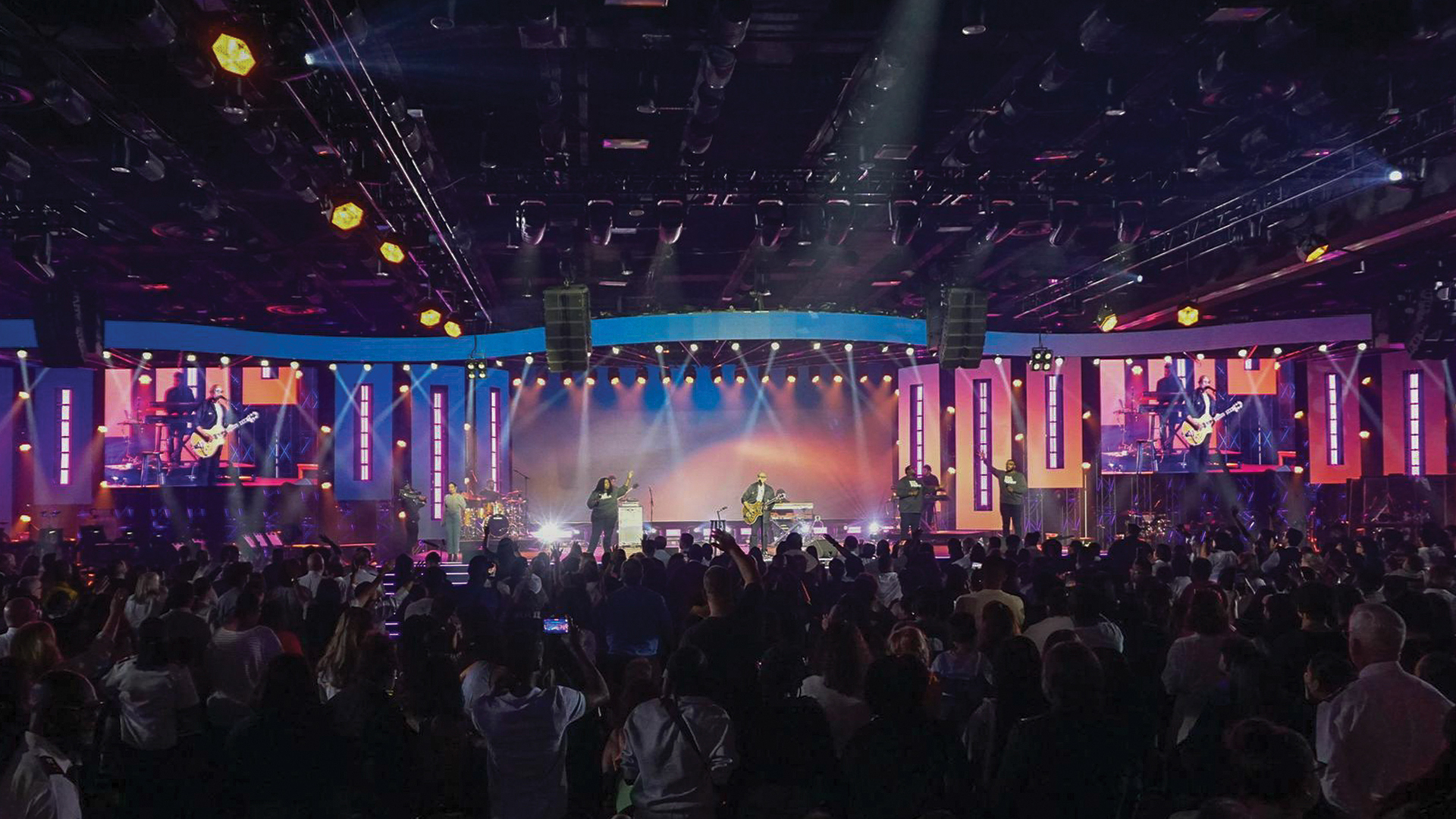
LED walls have become the scenic centerpiece of contemporary live production — from touring concert stages to corporate general sessions, from broadcast studios to outdoor festival environments. The technology has matured dramatically, with products like the ROE Visual Black Quartz BQ3, Absen PL2.5 Pro, and Unilumin UpadIII delivering stunning image quality at touring-viable weights. But the one thing the marketing materials for these products rarely address is what happens when the ground beneath the installation is anything other than a flat, level, engineered concrete surface. Uneven terrain turns a straightforward LED wall deployment into a structural engineering and logistics challenge that demands both preparation and improvisation.
Why Level Matters More Than It Seems
An LED wall is a modular system — individual panels lock together using magnetic or mechanical interconnects that are designed to create a rigid, planar surface. When that surface is not planar due to uneven ground, the interconnects experience racking stress that they are not designed to handle. At modest misalignments, the panels may fail to mate correctly, creating visible seams and brightness uniformity gaps at the join lines. At more severe misalignment, the mechanical stress can damage the interconnect hardware, crack the PCB substrate inside the panel, or cause pixel damage at the edges of misaligned tiles. Any of these failures during a show is a guaranteed visible problem — and fixing a failed LED panel mid-performance is not an option.
Ground Assessment Before Deployment
The professional approach to uneven ground installation begins before any equipment is unloaded. A site survey that includes ground flatness measurements using a digital level, a rotary laser level, or — on complex terrain — a total station theodolite, provides the data needed to plan the structural intervention. For outdoor festivals, the ground survey should map the terrain at the scale of the actual LED wall footprint with sub-centimeter level data at measurement intervals of no more than 500mm. Companies using Vectorworks Spotlight can import terrain data directly into the CAD environment and model the structural ground support against the real terrain profile before a single piece of hardware ships.
Ground Support Structures and Leveling Systems
The primary solution to uneven ground is a leveling substructure — a framework of adjustable legs, leveling feet, or temporary decking that creates a consistent, level base plane above the uneven terrain. Structural staging systems from Prolyte and Tomcat offer base plates with adjustable screw legs that accommodate up to 300mm of height variation — sufficient for moderate terrain irregularity. Beyond 300mm, custom structural solutions involving steel H-frame ground supports with individually adjustable feet become necessary. Ground protection systems like Signature Systems GrassMaster panels can simultaneously protect the venue surface and provide a working surface for crews to accurately level the base structure.
The Shimming Workflow
Even with a leveling substructure, LED wall installation on uneven ground requires a rigorous shimming workflow. Once the structural base is set as close to level as the adjustable feet allow, the crew positions the bottom row of LED panels and uses a precision digital spirit level to verify true horizontal across the full width of the installation. Composite shimming plates in thicknesses from 0.5mm to 10mm are used to bring individual support points to exact level. The shimming process must be methodical: starting at one end of the run, establishing a level datum, and working across the width before adding the second tier of panels. Skipping ahead to upper tiers creates compounding misalignment errors that become impossible to correct without deconstructing the entire installation.
Flying vs. Ground-Stacking on Uneven Terrain
One engineering solution to uneven ground is to fly the LED wall from a rigged truss structure rather than ground-stacking it. A wall hung from Prolyte H40V truss on chain motors is entirely independent of the ground surface — the unevenness beneath becomes irrelevant to the screen’s planarity. The rigging points in the host structure bear the load, and the wall hangs plumb and flat regardless of what the ground is doing. The trade-off is structural: a flown LED wall requires verified rigging points with sufficient dead load capacity — a 20-meter by 8-meter ROE Carbon CB3.9 installation weighs approximately 2,800kg before any additional truss or motor weight.
Curved LED Walls and the Uneven Ground Complication
Curved LED wall installations add a dimension of complexity to uneven ground scenarios that flat installations do not face. A curved screen relies on precise angular alignment between adjacent columns of panels. When the base structure is not level and the crew is simultaneously managing horizontal leveling and inter-column angle consistency across an uneven run, the margin for error collapses significantly. Most LED panel manufacturers — Absen, ROE Visual, Unilumin — publish maximum installation tolerances for curved configurations, typically specifying that adjacent panel face angles must be consistent to within 0.5 degrees. On difficult terrain, achieving that tolerance requires laser measurement verification at every column, not simply visual inspection.
Power and Data Infrastructure Challenges
The ground unevenness that complicates structural installation also complicates power and data cabling. Power multicore from Ceeform distribution boxes and data links running Cat6A or optical fiber to the LED processors must route safely to each panel position — not draped loosely across uneven terrain where they become trip hazards and points of mechanical damage. Professional installations use cable management channels fastened to the base structure or routed through buried conduit. Waterproof Harting connectors on outdoor-rated multicore cable are the standard specification for power feeds to LED walls in exposed environments.
Structural Sign-Off and Load Calculations
No significant LED wall installation on uneven terrain should proceed without a formal structural sign-off from a qualified engineer. The combination of modified load paths, unverified soil bearing capacity, and dynamic wind loading on a large vertical surface creates a risk profile that visual inspection alone cannot safely assess. Engineering firms familiar with temporary event structures — including specialists certified under Temporary Demountable Structures (TDS) guidelines in the UK or ANSI E1.21 in the US — provide the stamped engineering drawing that protects the production company and the crew. In a world where a ground-stacked LED wall failure is a catastrophic physical hazard, that engineering sign-off is the most important document on the job site.
Produced for AV Industry Insight | © 2025 All Rights Reserved