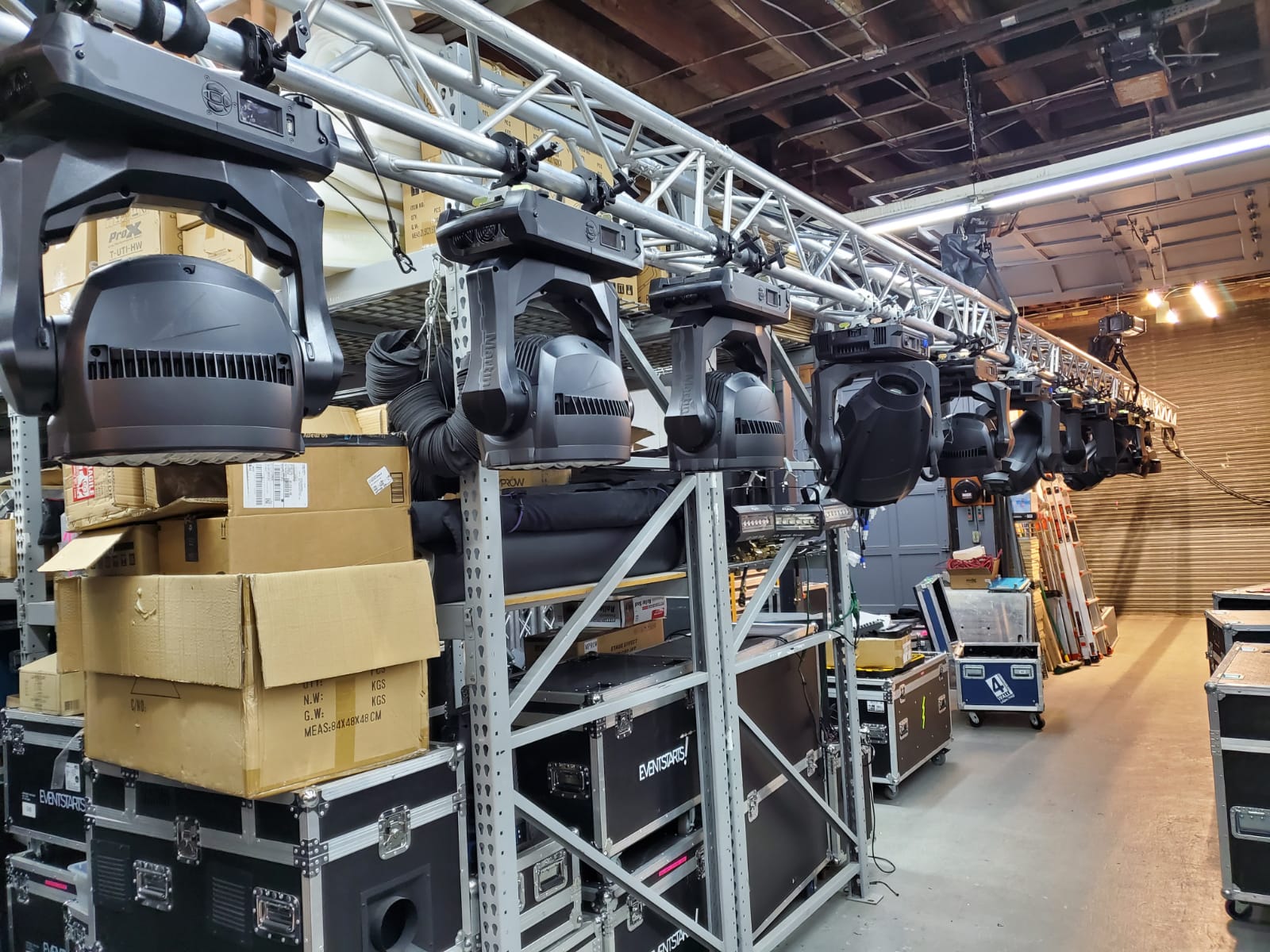
The aluminum structural truss that supports every major production exists in a state of constant negotiation with physics. These engineered assemblies bear enormous loads while spanning distances that test material limits—and occasionally, they decide to explore movement patterns their designers never intended.
The Physics of Structural Ambition
Professional entertainment rigging employs truss systems from manufacturers like Tyler Truss, Global Truss, and Prolyte that undergo rigorous engineering analysis. Load capacities, deflection limits, and safety factors are calculated with precision that would satisfy aerospace engineers. Yet these calculations assume conditions that real-world productions sometimes exceed.
A twenty-meter truss span loaded to seventy percent of rated capacity will deflect—bend downward in the middle—by predictable amounts under static conditions. Add movement from motor-driven scenic elements, oscillation from wind exposure, or harmonic excitement from low-frequency audio content, and that deflection becomes dynamic. The truss breathes, bounces, and sways in patterns that sometimes alarm technicians watching from below.
Wind and the Dancing Grid
Outdoor stage structures face wind loading that transforms static engineering into dynamic performance. The Stageline SL320 mobile stage includes integrated roof truss designed to handle specified wind velocities, but wind rarely behaves as specifications predict. Gusts create momentary forces that exceed steady-state calculations, and turbulence from surrounding structures adds unpredictable loading patterns.
Experienced production managers watch weather forecasts with the intensity of sailors planning ocean crossings. Wind speeds that fall within acceptable limits during site surveys might spike dangerously during actual events. The truss that handled afternoon soundcheck conditions becomes an acrobatic performer when evening thunderstorms push unexpected air masses across the venue.
Resonant Frequencies
Every truss assembly possesses natural resonant frequencies determined by its physical dimensions, material properties, and loading conditions. When external forces excite these frequencies whether from wind, crowd movement, or acoustic energy from massive subwoofer arrays the truss amplifies those vibrations. A structure that sits perfectly stable under most conditions might suddenly oscillate when a specific bass note plays.
The Tacoma Narrows Bridge collapse of 1940 demonstrated resonance destruction at catastrophic scale wind matching the bridge’s natural frequency caused oscillations that tore the structure apart. Entertainment truss operates under vastly different conditions, but the physics remain relevant. Smart rigging engineers calculate resonant frequencies and design systems that avoid excitation from common sources.
Motor Movements and Momentum
Contemporary productions feature automated rigging systems that move scenic elements, lighting fixtures, and even performers through three-dimensional space. CM Lodestar motors and Kinesys automation systems enable precise positioning, but these movements create forces that static load calculations don’t capture.
A lighting truss carrying two thousand kilograms might handle that weight easily when stationary. Accelerate that mass quickly as might occur during a dramatic lighting reveal—and acceleration forces multiply the effective load. Decelerate rapidly, and momentum continues attempting to move the truss past its stopping point. These dynamic loads stress connections and support points in ways that exceed static capacity calculations.
Historical Lessons in Structural Drama
The entertainment industry’s safety culture developed partly through incidents where truss structures behaved unexpectedly. The 2011 Indiana State Fair stage collapse, caused by wind gusts from an approaching storm, killed seven people and prompted nationwide reevaluation of temporary structure safety standards. That tragedy accelerated development of weather monitoring protocols and structural inspection requirements that now protect productions worldwide.
Earlier incidents shaped equipment design itself. The ESTA standards that govern entertainment rigging emerged from decades of accumulated experience successes and failures that taught the industry how truss structures behave under real-world conditions. Every safety factor in contemporary engineering reflects lessons learned from structures that attempted acrobatics their designers never intended.
Connection Point Vulnerabilities
Truss sections connect through bolted joints and specialized coupling systems that transfer loads between elements. Conical couplers and spigot connections provide secure joints when properly installed, but installation quality varies with crew experience, time pressure, and working conditions. A connection that looks solid might hide partial engagement that only reveals itself under dynamic loading.
Professional rigging inspections include verification of every connection point before structures bear load. The ETCP certification program trains riggers to recognize partial engagement, incorrect hardware, and other conditions that might allow connections to fail under stress. These inspections catch problems before truss structures have opportunity to demonstrate their acrobatic tendencies.
Load Cell Monitoring
Advanced productions deploy load monitoring systems that measure forces at pickup points in real-time. Broadweigh load cells and similar devices report actual loads to networked displays, allowing head riggers to monitor structural behavior throughout events. When wind gusts increase loading, or when dynamic movements create force spikes, these systems provide data that supports intervention decisions.
The transition from estimated to measured loading represents a fundamental advance in structural safety management. Previous generations of riggers worked from calculations and experience; contemporary professionals augment that knowledge with real-time data. When a truss attempts unexpected movement, monitoring systems detect the associated load changes before visual observation might notice the problem.
The Human Factor
Truss structures follow the laws of physics with perfect consistency the unexpected behaviors that characterize their acrobatic attempts emerge from conditions humans create and sometimes fail to anticipate. Overloading beyond rated capacity, improper connection procedures, inadequate structural analysis, or failure to respond appropriately to changing conditions all contribute to structural misbehavior.
The production rigger who approaches every load-in with appropriate caution verifying calculations, inspecting equipment, monitoring conditions—prevents most potential incidents. The truss doesn’t decide to perform acrobatics; it responds predictably to forces that sometimes exceed what designers anticipated or what crews properly controlled.
When structures do exhibit unexpected movement, professional response involves immediate evaluation rather than panic. The oscillating truss might require load reduction, additional bracing, or show modifications that reduce dynamic forces. Understanding why the structure moved guides appropriate intervention and builds the experience base that prevents future incidents.
The truss that attempts acrobatics ultimately teaches lessons about the relationship between human planning and physical reality. Every unexpected movement reveals something about conditions the production team should have anticipated—knowledge that, properly applied, makes future structures more predictable and performances safer for everyone beneath them.