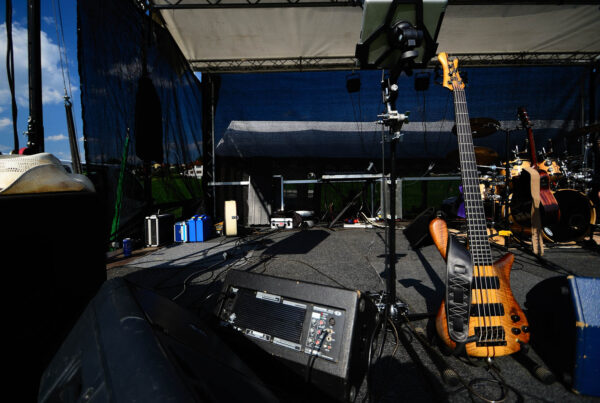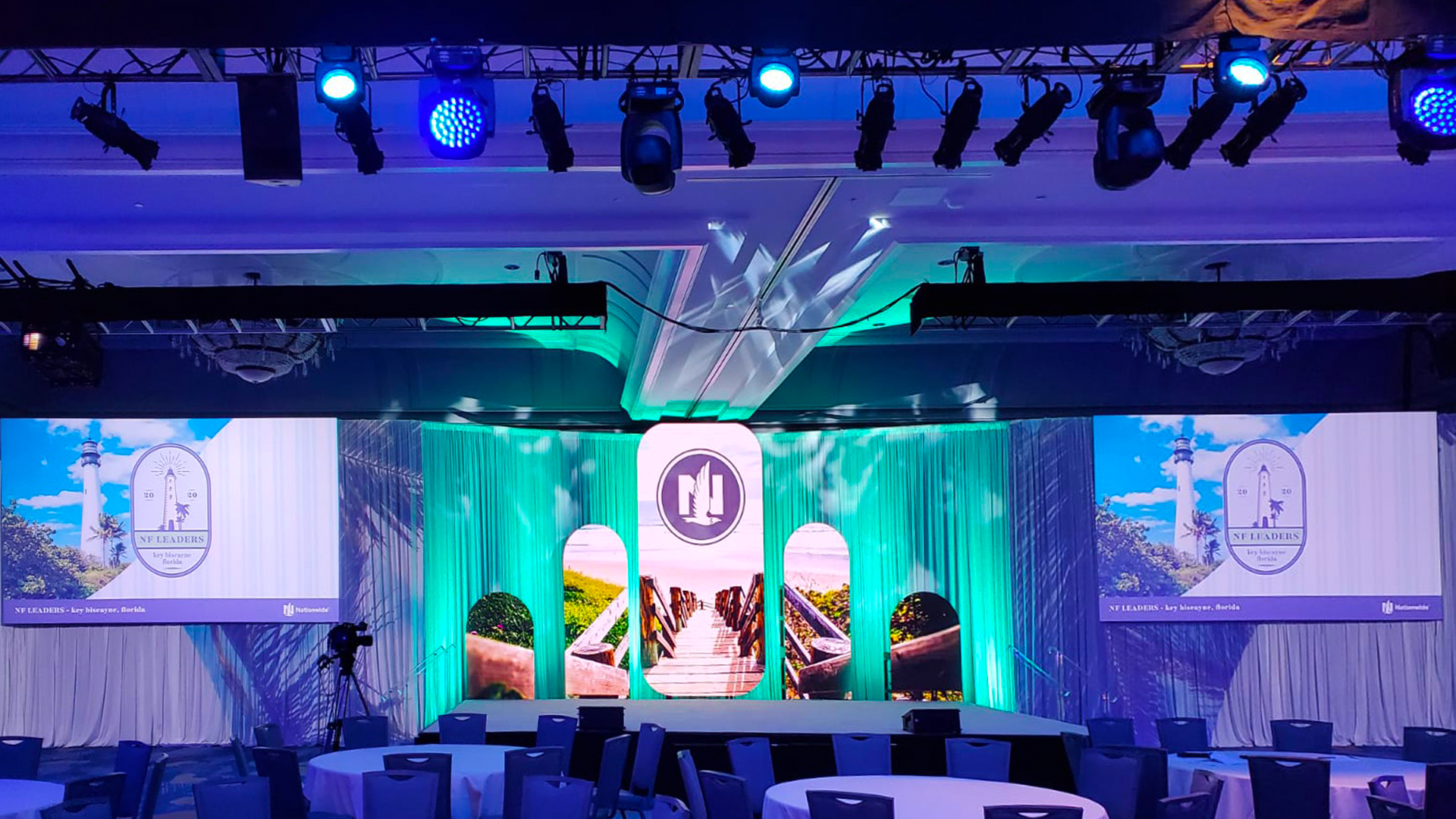
The marketing images for LED walls show them hanging beautifully in perfectly air-conditioned arenas with level floors and ample rigging points. Reality frequently delivers a converted car park with drain channel ridges, a marquee floor with grass-induced undulation, or a historic venue whose floors haven’t been level since the building was constructed in 1890. Keeping an LED wall rig stable, plumb, and visually consistent on challenging surfaces requires a systematic approach that starts long before the first flight case is opened.
Ground Support vs Flown Systems
The fundamental choice for any LED wall deployment is between a ground-supported system — standing on floor legs or rigged from a goal post structure — and a flown system suspended from venue or roof structure. Ground-supported systems on uneven surfaces face the challenge of achieving a plumb vertical plane despite a non-level base. The preferred solution is adjustable base feet — threaded levelling feet on each vertical support leg that allow the crew to compensate for floor undulation up to approximately 50mm. Systems requiring more compensation should use fabricated shim packs or custom timber wedges engineered to the specific floor profile.
Survey and Pre-Build Floor Assessment
A professional LED wall deployment begins with a floor survey — a systematic measurement of the floor level across the entire footprint of the structure. Using a laser level or water level to establish a datum plane, the survey identifies the maximum deviation from level and the gradient direction, directly determining shim requirements at each leg position before the structure is built.
For large structures 12 metres wide or more, the floor survey should include load settlement estimation. A soft or springy floor will compress differently under the weight of a loaded LED wall structure than under a person standing at the survey point. Structural engineers on marquee or temporary floor productions should provide settlement predictions that inform the final levelling specification, because a rig that is level before the panels are installed may be measurably non-plumb once the full dead load is applied.
Rigging Hardware for Uneven Conditions
The rigging hardware ecosystem for LED wall ground-support includes specific components designed for uneven surface compensation. SuperTruss and Prolyte both manufacture variable-angle base plates that accept up to 5 degrees of cant from vertical. For balloon-framed LED panel systems — ROE Visual CB5 and Absen A3 Pro — the ground support frame carries the levelling function through heavy-duty levelling bolts with lock nuts, allowing precise adjustment and a locked-off final position that won’t shift under vibration or crowd movement.
Wind Loading and Outdoor Stability
Outdoor LED wall ground-support systems face wind loading as an additional stability challenge. A 12m x 6m LED wall presents approximately 72 square metres of surface area to a crosswind, generating significant lateral force that must be resisted by the structure’s base. The professional response is ballasting — adding concrete kentledge blocks or water-filled counterweights to the base of the structure. Ballasting calculations should be performed by a structural engineer using the BS EN 1991-1-4 wind load standard, not estimated on site.
Visual Alignment After Installation
Even a perfectly levelled structure will reveal visual alignment issues in the LED panel surface once the panels are installed and powered. Final visual alignment verification should be conducted from the primary viewing position using a brightness reference state: full-white content at a consistent intensity. Under this state, cabinet seams, brightness variations, and vertical plane distortions are all maximally visible and can be addressed before the show opens. The Brompton Tessera per-panel calibration system corrects brightness and colour variation electronically, but cannot compensate for mechanical misalignment.