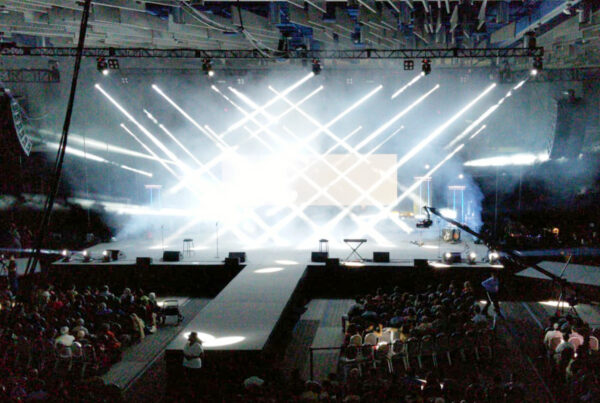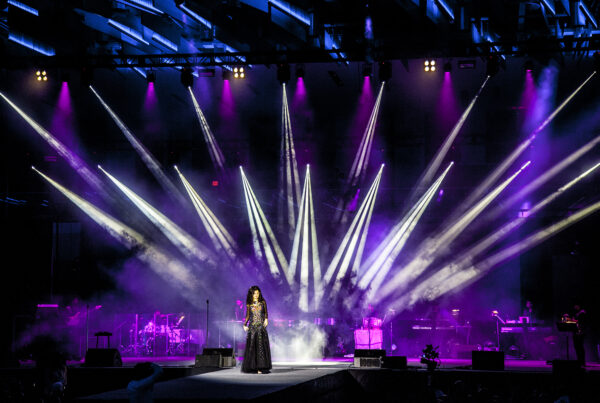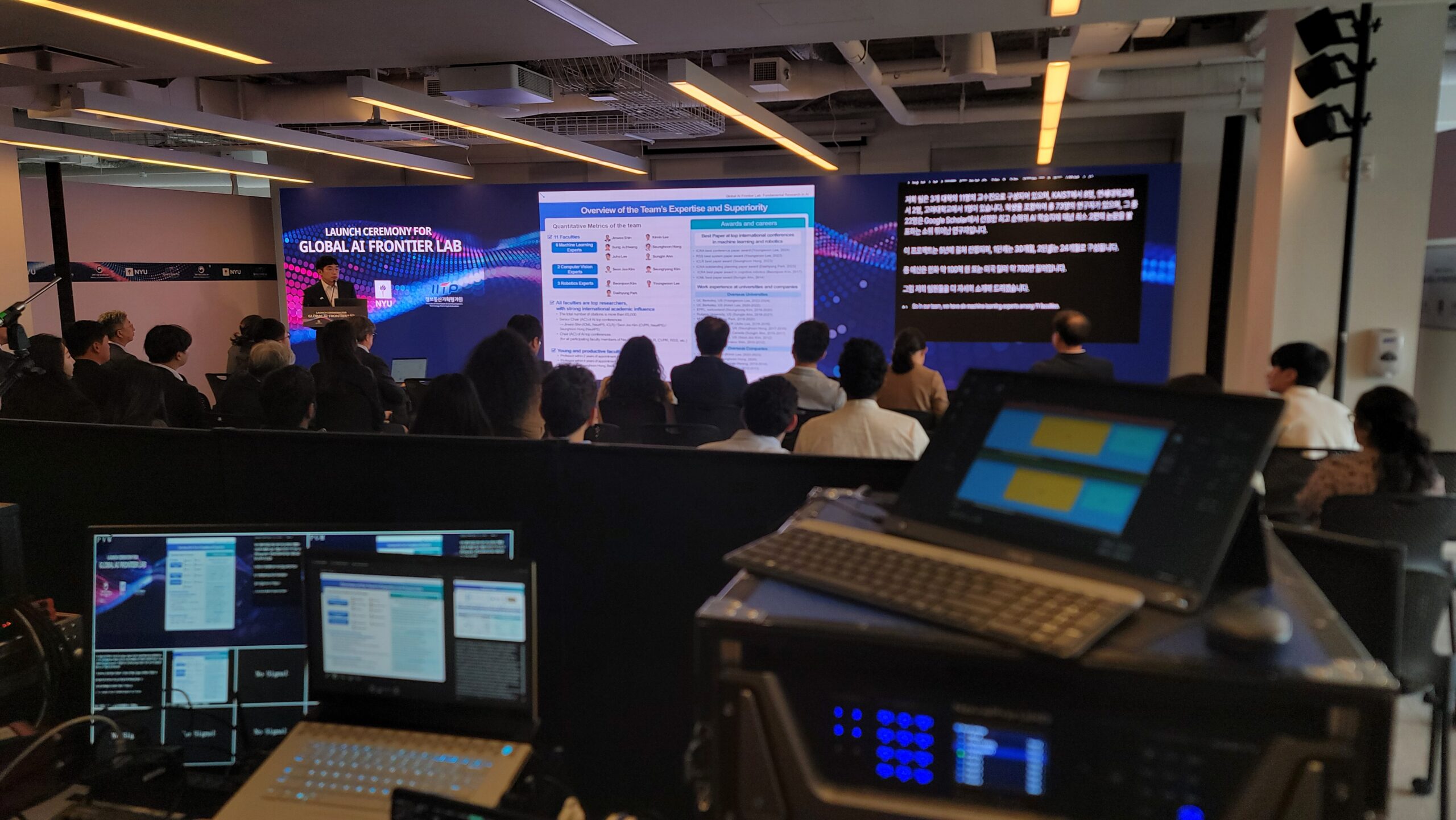
The shift from traditional projection systems and LCD screens to LED walls represents one of the most significant upgrades in visual technology over the past decade. Whether you’re planning a corporate event, concert, trade show, or broadcast production, understanding why LED walls have become the industry standard will help you make informed decisions about your next visual setup.
Superior Brightness That Defeats Ambient Light
Traditional projectors struggle in environments with ambient light. Even the brightest projectors rated at 10,000 lumens can appear washed out when competing with sunlight streaming through windows or venue lighting that can’t be dimmed. LED walls operate differently because each pixel produces its own light rather than reflecting projected light off a surface.
Modern LED panels achieve brightness levels between 1,500 and 6,000 nits for indoor applications, with outdoor-rated panels reaching 8,000 to 10,000 nits. To put this in perspective, a typical LCD television produces around 300 to 500 nits. This means LED walls can display vibrant, high-contrast images in direct sunlight at outdoor festivals or in brightly lit convention halls where traditional displays would be nearly invisible.
Seamless Scalability Without Compromise
One of the most practical advantages of LED technology is modularity. Traditional displays come in fixed sizes, forcing event planners to work around those limitations. If you need a larger screen, you need to purchase an entirely new unit. LED walls are built from individual panels, typically ranging from 500mm x 500mm to 1000mm x 500mm, that lock together to create displays of virtually any size or shape.
This modularity means you can create a 10-foot wide video wall for an intimate corporate presentation and expand that same equipment to a 60-foot wide concert backdrop the following week. Custom configurations are equally achievable, including curved surfaces, corner wraps, floor-to-ceiling installations, and non-traditional aspect ratios that would be impossible with conventional screens.
True Blacks and Exceptional Color Accuracy
LCD and projection systems struggle with black levels because they rely on backlighting or reflected light. Even when displaying a black image, light bleeds through, creating a grayish appearance that reduces overall contrast. LED technology solves this problem because individual pixels can be turned completely off, producing true blacks that make colors appear more vivid and images more dynamic.
Professional LED walls achieve contrast ratios exceeding 5,000:1, compared to typical LCD contrast ratios of 1,000:1. This difference becomes immediately apparent when displaying content with dark scenes, logos on black backgrounds, or any footage where shadow detail matters. Color accuracy is similarly impressive, with high-end LED panels covering over 95 percent of the DCI-P3 color gamut used in professional film production.
Viewing Angles That Serve Every Seat
Traditional LCD displays and projection screens suffer from significant color shift and brightness loss when viewed from angles beyond 30 to 45 degrees from center. Attendees seated at the sides of a venue often see washed-out, discolored images. LED walls maintain consistent color and brightness at viewing angles up to 160 degrees horizontally and vertically, ensuring that every audience member sees the same high-quality image regardless of their position.
This wide viewing angle makes LED walls particularly valuable for large venues, trade show booths where visitors approach from multiple directions, and any environment where seating positions cannot be controlled. The consistency eliminates the need to compromise on booth placement or seating arrangements to accommodate display limitations.
Reliability Under Demanding Conditions
Projection systems require careful alignment, regular lamp replacement, and protection from dust and physical contact. A single misaligned projector in a blended multi-projector setup can create visible seams and color inconsistencies. LED walls eliminate these concerns through solid-state construction with no moving parts, no lamps to burn out, and no alignment requirements.
LED panels are designed for rapid deployment and can withstand the rigors of touring and repeated installation. Individual panels can be quickly replaced in the field if damage occurs, without taking down the entire display. Many LED wall systems include redundant power and signal pathways, ensuring that a single cable failure doesn’t black out entire sections of the display.
Energy Efficiency and Operating Costs
While LED walls require substantial power for large installations, their efficiency compares favorably to projection systems when measuring output per watt. A projector consuming 2,000 watts might produce 10,000 lumens, much of which is lost to heat and inefficient light projection. LED panels convert a higher percentage of electrical energy directly into visible light, reducing waste heat and power consumption relative to brightness output.
Maintenance costs favor LED technology over the long term. Projection lamps require replacement every 1,500 to 3,000 hours at costs of $300 to $800 per lamp. LED panels typically operate for 50,000 to 100,000 hours before reaching 50 percent brightness, with no scheduled lamp replacements. This longevity translates to significantly lower total cost of ownership despite higher initial acquisition costs.
Creative Possibilities and Stage Integration
LED walls enable creative applications that simply aren’t possible with traditional displays. Transparent LED panels allow audiences to see performers through the screen while displaying graphics. Flexible LED curtains can be draped, curved, or suspended in ways that rigid screens cannot. Floor-mounted LED panels create immersive environments where visuals extend beneath performers’ feet.
Integration with live camera feeds happens in real-time with minimal latency, supporting applications like IMAG (image magnification) at concerts where close-up shots of performers appear instantly on massive screens. Advanced pixel mapping software allows LED surfaces of any shape to display content designed specifically for their unique geometry, treating the entire wall as a unified canvas rather than a simple rectangle.
Content Requirements and Production Value
LED walls display content exactly as produced, without the color shifts and geometric distortion common with projection. This precision demands higher quality source content but rewards that investment with visuals that match creative intent. Production teams working with LED walls can confidently design content knowing that colors will appear as specified and details will remain sharp at any scale.
The high refresh rates of modern LED panels, typically 1,920Hz to 3,840Hz, eliminate flickering that can be captured by cameras at live events. This characteristic is essential for broadcast applications and social media content where traditional displays might show visible scan lines or banding in recorded footage.
Making the Transition
The decision to use LED walls over traditional displays depends on specific event requirements, budget constraints, and venue characteristics. For applications demanding high brightness, large scale, reliability, and creative flexibility, LED technology offers clear advantages that justify the investment. As rental costs continue to decrease and resolution options expand, LED walls are becoming accessible for an increasingly broad range of events and budgets.
Understanding these technical and practical differences enables informed conversations with AV providers and helps ensure that visual solutions match event objectives. The right display technology can transform audience experiences, and LED walls represent the current standard for premium visual impact.