Overview of Suspended LED Impact
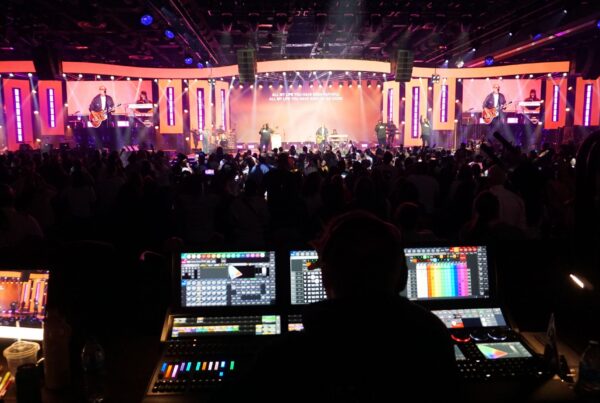
Trade shows have shifted from simple booths to high impact visual zones where suspended LED walls dominate the skyline of major expo halls. AV teams, production managers, lighting directors, and exhibitors fight for visibility in crowded spaces, and flown LED displays have become one of the strongest attention grabbing tools available. The industry moved from ground supported LED to flown systems once lighter panel frames, stronger rigging hardware, and faster processors became reliable for overhead use.
Early LED History in Trade Shows
Back in the eighties and early nineties, show floors relied on projection systems and printed signs. Early LED tiles were too heavy for rigging and too limited in processing power. The landscape changed when manufacturers like Barco, Daktronics, and later ROE Visual pushed modular LED into events. Concert touring adopted flown LED first, and the trade show market followed. Today suspended LED structures are standard for automotive, tech, gaming, broadcast, and fintech exhibitors.
Visibility Advantage of Suspended LED Walls
Suspended LED walls give exhibitors vertical dominance. Expo halls are visually overloaded, making long distance visibility a challenge. A booth with a flown LED circle, ring, or rectangular banner becomes a landmark. Top tier exhibitors run looping motion graphics created in After Effects or Cinema 4D paired with servers like Resolume Arena, Disguise, or Pandoras Box. LED engineers balance content needs with processor headroom to handle HDR and high bit rate video.
Rigging Workflow and Structural Planning
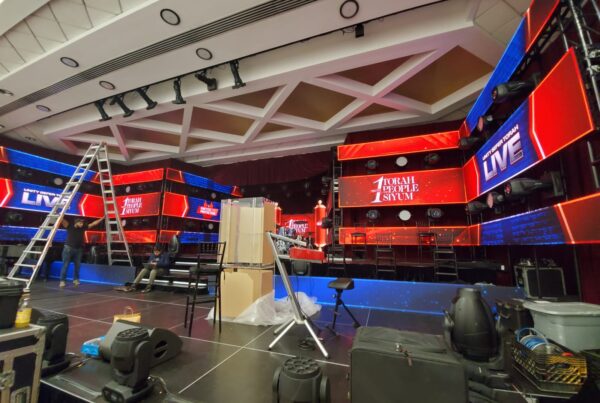
Rigging is the backbone of any suspended LED setup. Production crews rely on truss from Tomcat or Prolyte and motors from CM or Chainmaster. Engineers work in Vectorworks Spotlight or AutoCAD to map loads, pick points, and building capacities. Venues like Las Vegas Convention Center and Messe Frankfurt enforce strict rigging approvals. Onsite, LED teams build the wall on the ground, align panels, test processors, and fly the system with rigging chiefs. Proper signal flow, power redundancy, and crew communication are as critical as weight limits.
Content and Media Server Integration
Modern trade shows rely on LED content workflows that go far beyond static branding. Exhibitors use Notch for realtime effects, NDI for live demos, and synced show control using SMPTE timecode. Larger booths combine suspended LED with floors and walls to form unified pixel spaces. AV teams link all displays with one central controller so motion packs, color schemes, and brand graphics stay perfectly synchronized across the booth.
Booth Space Optimization Through Overhead Displays
Suspended LED frees up booth space that would normally be taken by ground supported structures. Exhibitors want open layouts for demo pods, meeting zones, and product displays. Overhead LED provides visibility without consuming square footage. Designers often specify curved LED panels from brands like ROE Visual or InfiLED to build rings, soft corner rectangles, and multi sided banners that produce smoother lines and more modern visuals.
High Brightness and HDR Processing Advantages
The high brightness output of high brightness LED walls is essential in expo halls with bright ambient lighting. Projection is rarely used now due to washout issues. LED processors like Brompton Tessera, Novastar, and Colorlight handle scaling, HDR color control, and calibration. Industries like medical tech and automotive push for HDR capable systems so product colors match brand standards.
Kinetic LED Structures for Extra Attention
Some exhibitors use suspended LED as kinetic or moving elements. Rotating LED rings or motorized tracks using Kinesys automation create show stopping motion and generate organic social media coverage. These structures require load monitoring, safety checks, and precise motion cues to execute reliably. When done well, kinetic LED instantly elevates booth perception and visitor engagement.