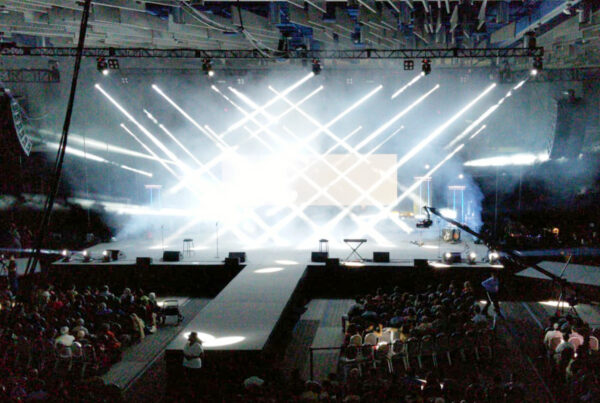
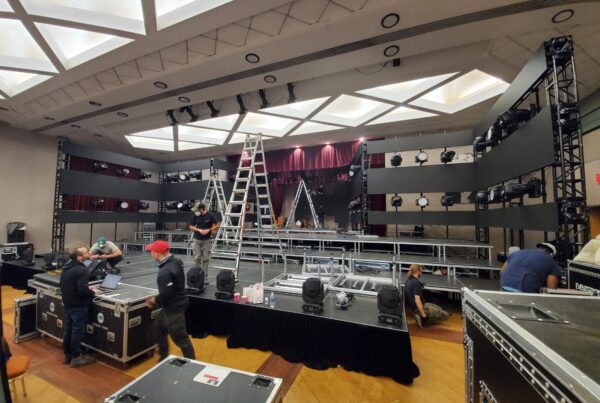
Structural aluminum truss systems and chain hoists are the structural foundation upon which the entire visual environment of a large-scale live event is constructed. They support lighting fixtures, LED walls, speaker arrays, scenic elements, and projection equipment — collectively representing millions of dollars in hanging payload. When this equipment is transported carelessly, the consequences range from cosmetic damage to equipment that must be returned to inventory to structural failures that can have life-safety implications. Understanding how to transport truss and hoists correctly is fundamental professional knowledge for any production company running large-format events.
Understanding Truss Construction and Its Vulnerabilities
Modern production truss is manufactured from 6082-T6 aluminum alloy — a high-strength aerospace-grade alloy selected for its combination of tensile strength, weight, and corrosion resistance. Leading truss manufacturers including Global Truss, Prolyte Group, Tomcat USA, Tyler Truss, and Milos Truss produce systems that are engineered to specific load ratings — but those ratings apply to undamaged truss in its original specification. Any impact, bend, or distortion to a chord or diagonal member fundamentally alters the load path through the structure and can reduce its rated capacity unpredictably.
The critical failure modes from improper transport include: chord denting from point loads applied perpendicular to the truss length; diagonal bowing from side impacts; connector distortion at bolt hole locations; and end cap damage from drops and collisions during loading. Visually, some of these failures are immediately apparent; others are invisible deformations that only become detectable under load — or during a rigging failure investigation.
Dedicated Transport Solutions
The production industry has developed purpose-built transport cases and trailers for structural rigging components. Truss transport trailers from manufacturers like Kenect Trailers and Stageright Corporation provide protected bays that cradle truss sections horizontally with padded support points at manufacturer-specified intervals, preventing chord deflection during road transport. For air freight or intermodal shipping, truss sections should be placed in custom aluminum flight cases with foam padding positioned at all connection points and end caps, not at mid-span locations where the chord is strongest.
Chain Hoist Transportation and Maintenance
Electric chain hoists — the CM Lodestar, Harrington ER2, Stagemaker SR Series, and Verlinde Stagehand being the most common in event production — contain precision mechanical components that require both careful handling and regular maintenance. The chain fall is particularly vulnerable: kinking, knotting, or subjecting the chain to side loading during transport introduces stress concentrations that can compromise its working load limit
. Industry standard practice for chain hoist transport is to retract the chain fully into the hoist body, secure the hook on its keeper, and place the unit in a padded hoist bag or case that protects the motor body from impact. Hoists should be transported and stored in an orientation that prevents lubricant migration — refer to the manufacturer’s specifications, as different hoist designs have different orientation requirements for the gearbox.
Documentation and Inspection Protocol
Every truss section and hoist that enters a production’s inventory should have a documented inspection history. This means recording: the date of last certified inspection, the inspector’s credentials and signature, any observed defects and their remediation, and the load rating confirmation. In the EU, the BGV C1 (now DGUV Regel 115-002) standard mandates annual inspection of load-bearing rigging equipment by certified rigging inspectors. In the US, ANSI E1.6-1 for electric chain hoists and ESTA standards provide the technical framework, with OSHA providing the regulatory context.
On the production floor, establish a visual inspection protocol for every piece of truss and every hoist before each deployment. Any truss section showing dents, bends, cracked welds, or distorted end connectors must be tagged out of service and not loaded until inspected by a qualified structural engineer or the manufacturer’s representative. The transport damage that seemed minor in the truck becomes a catastrophic failure under a hanging load — and the production professional’s responsibility is to ensure that failure never reaches the rigging plot.
Load Planning and Weight Distribution in Transport
The final transport consideration is vehicle load planning. Truss and motor loads on production trucks must be distributed to maintain axle weight compliance within legal limits and to prevent load shifting during transit that can damage equipment or compromise vehicle stability. Work with your trucking company to complete a proper Bill of Lading with accurate weights for all production equipment. For international shipments, accurate Carnet ATA documentation lists all production equipment with purchase values and serial numbers — essential for customs compliance and for recovery if equipment is damaged or lost in transit.