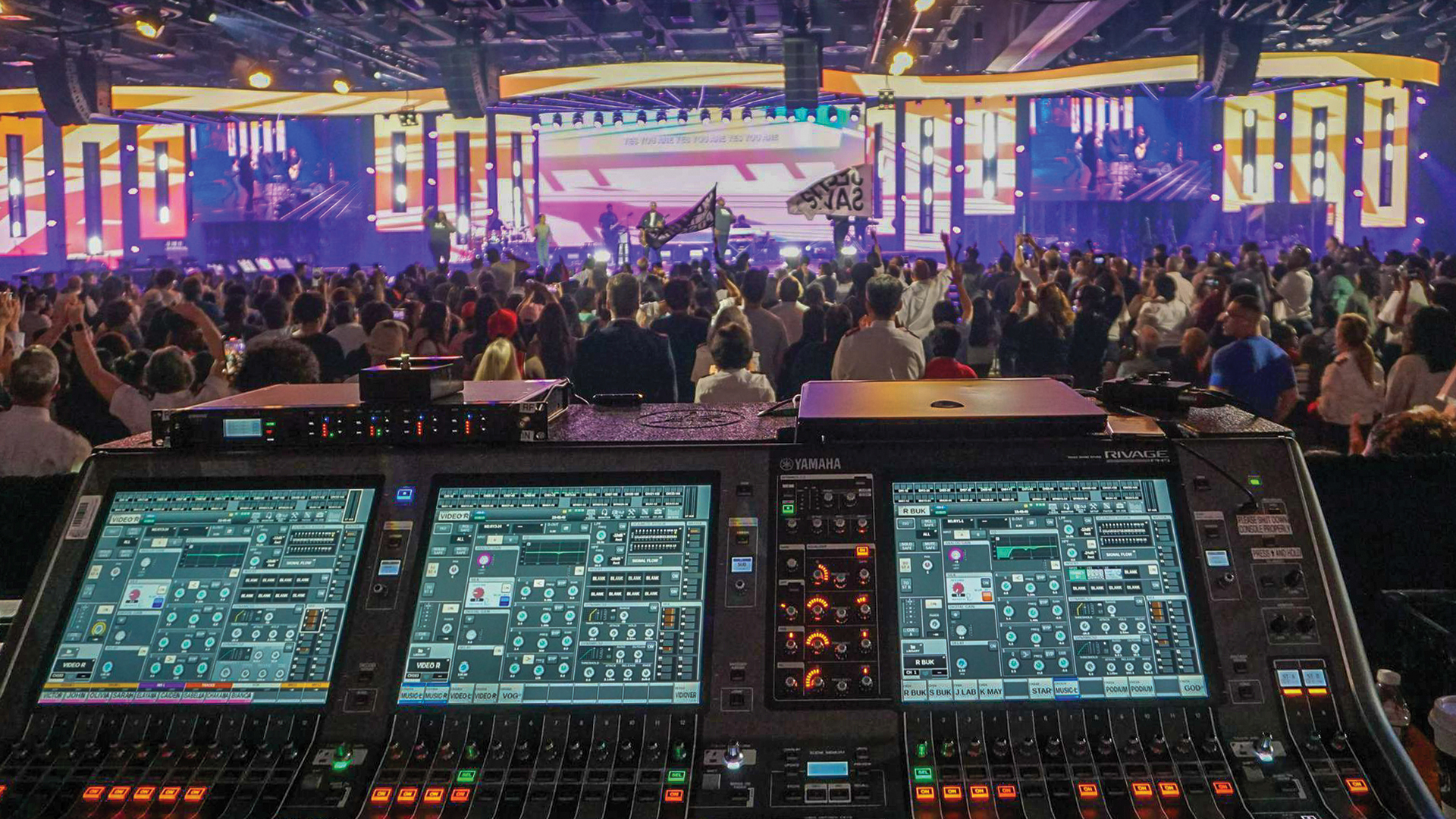
The ambition of contemporary live event scenic design has grown dramatically alongside the production values of the industry. Corporate general sessions that once made do with a podium, a draped table, and a projection screen now deploy architectural scenic environments — massive LED-clad towers, suspended sculptural elements, motorized set pieces, multi-level platforms, and bespoke structural scenery that would not look out of place on Broadway. This visual ambition is understandable and commercially motivated — high-production-value environments create brand experiences that simple staging cannot match. But it introduces a category of production challenge that many event producers encounter without adequate preparation: the structural, logistical, and safety demands of heavy scenic elements
on stages that were designed for people, not architecture.
Floor Load Capacity: The First Constraint
Every stage platform — whether a permanent venue stage or a temporary staging system — has a defined floor load capacity measured in pounds per square foot (PSF) or kilograms per square meter. Exceeding this capacity risks catastrophic structural failure: deflection of the stage deck, collapse of support legs, or in extreme cases, penetration of the stage through the venue floor below. The load capacity of temporary staging systems from manufacturers like Staging Concepts, Prolyte Group, and James Thomas Engineering is typically 125–250 PSF for standard production configurations. Heavy scenic pieces — steel-framed LED towers, water features, automotive display platforms — can impose point loads of 500–2,000 PSF or more at their support feet.
The point load vs. distributed load distinction is critical. A scenic element that weighs 1,000 pounds distributed across a 10×10-foot base imposes 10 PSF — well within standard staging capacity. The same 1,000 pounds supported on four 4-inch legs imposes the entire weight across four 16-square-inch contact areas, generating point loads that can exceed 1,000 PSF. Load spreading plates — steel plates positioned beneath scenic legs to distribute point loads across a wider area of the stage deck — are a standard engineering mitigation. Their sizing must be specified by a qualified structural engineer based on the actual loads and the stage system’s structural characteristics.
Transport and Load-In: The Physical Logistics Challenge
A scenic element that weighs 2,000 pounds and measures 20 feet tall doesn’t enter a venue through the lobby. Large scenic pieces require advance logistics coordination that begins weeks before load-in: confirming the venue’s dock door dimensions, ceiling height in the loading corridor, elevator capacity (if applicable), and the route from the loading dock to the stage floor. The 90-degree turn that a scenic column must navigate in the service corridor may be the detail that determines whether the scenic design is achievable at all.
Moving heavy scenic pieces through a venue requires material handling equipment appropriate to the weight and geometry of the piece — engine hoists, pallet jacks, custom rolling dollies, and Genie lifts or Skyjack boom lifts for vertical positioning. The crew operating this equipment must be trained in load handling and rigging safety. A 1,500-pound scenic piece that tips during repositioning on the stage floor is not merely a property damage event — it is a potential serious injury or fatality.
Structural Engineering: When Intuition Is Not Enough
The scenic designer’s vision for a massive stage environment is not a structural specification. Before any heavy scenic element is approved for production, its structural design must be reviewed and stamped by a licensed structural engineer. This engineering review confirms: that the element’s own structural integrity is sufficient for its intended use, that the connection between the element and the stage deck (or rigging structure) is adequate for the imposed loads, that dynamic load factors for movement (automation, vibration from sound systems) have been accounted for, and that the assembly and disassembly sequence is safe for the crew performing it.
The engineering documentation produced by this review — load calculations, connection details, assembly sequence drawings — becomes the build specification against which the scenic fabrication shop (whether ATOMIC Design, SGPS, PRG Scenic Technologies, or a local scenic house) executes the work. Deviations from the engineering specification during fabrication must be reviewed and approved by the engineer of record — field modifications made for convenience or schedule reasons that have not been structurally reviewed are one of the primary causes of scenic element failures in live production.
Automation: When Scenery Moves
Automated heavy scenic pieces — elements that travel, rotate, fly, or transform during the show — add an exponential layer of complexity to every challenge described above. Scenic automation systems from Show Distribution & Control (SDC), Stage Technologies, and TAIT use motion control platforms to drive electric motors, winches, and linear actuators with programmed precision. But automation is only as safe as the safety interlock systems designed to stop motion when unexpected conditions arise — obstruction sensors, encoder feedback monitoring, and emergency stop circuits that are tested and certified before any talent enters the stage environment.
Establish clear automation rehearsal protocols: first move at 10% of design speed without personnel in the movement zone, progressively increasing speed across multiple rehearsal passes, with talent on stage only when the system has been verified through multiple clean full-speed cycles. The automation operator maintains exclusive control of the motion system during automated sequences, with a designated stage manager holding a physical emergency stop that overrides all programmed motion. Heavy scenic that moves is spectacular when it works and catastrophic when it doesn’t — the discipline in the rehearsal room is what determines which outcome you get.