The Multi-Day Festival Audio Challenge
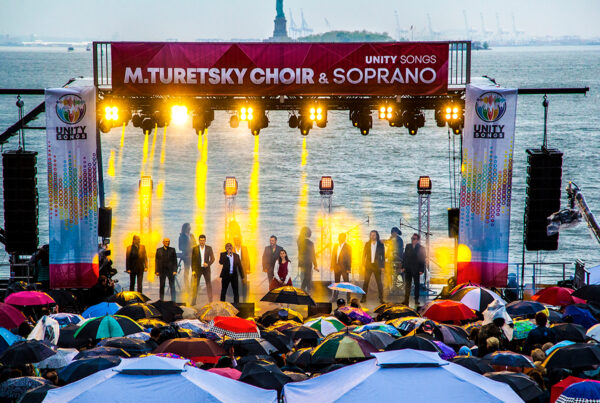
A multi-day festival with multiple acts creates audio system requirements that differ fundamentally from those of a single-act arena tour. The system must serve the acoustic requirements of 30–50 different artists across 3–5 days, accommodating styles from acoustic folk to heavy metal within the same physical installation, operated by a rotating cast of guest engineers bringing different technical philosophies and creative approaches to the same FOH position.
The line array system at the center of this environment must be optimized for flexibility and consistency rather than for the specific acoustic character of any single artist’s production. It must have sufficient headroom for the most demanding heavy rock or EDM act, sufficient accuracy for the most discerning acoustic artist, sufficient reliability to survive 72+ hours of near-continuous operation, and sufficient serviceability to allow component maintenance without affecting the show schedule. These requirements push system design philosophy toward a different set of priorities than single-act touring system design.
System Design Philosophy for Multi-Act Flexibility
The professional approach to multi-day festival line array design begins with the recognition that no single EQ or system setting will serve all acts equally well—and that attempting to optimize the system for one act will inevitably compromise its performance for others. The system must therefore be designed and configured to be acoustically neutral: a blank canvas that each guest engineer can customize to their specific requirements through the FOH console, within a physical infrastructure that performs consistently and predictably across all operating conditions.
Acoustic neutrality in a festival line array system means achieving a measured frequency response at the FOH position that is flat within ±2dB across the audible frequency range, with consistent polar behavior that maintains this tonal balance across the audience field. This baseline is established during system optimization on the first day of the festival advance period, using Smaart measurement and the system processor—typically a Lake LM44 or d&b D80—to apply corrective equalization that compensates for the specific acoustic characteristics of the site and system.
L-Acoustics K2 and K1 systems are frequently specified for flagship festival stages because their combination of maximum SPL capability and acoustic accuracy serves the acoustic neutrality requirement better than systems optimized primarily for maximum output. The K2’s wide dynamic range—from the clean reproduction at moderate levels required for acoustic artists to the maximum output required for headline electronic acts—without tonal character changes across the dynamic range is a technical attribute that festival programmers cite as a primary specification factor.
System Maintenance Protocols for 72+ Hour Operations
A line array system operating for 72+ hours across a multi-day festival accumulates operational stress that scheduled maintenance must address systematically. The thermal cycling of amplifiers—cooling overnight and reheating during each day’s programming—creates expansion and contraction stresses in solder joints and connector contacts that can produce intermittent faults visible only under operational load conditions.
Professional festival audio companies operating multi-day deployments follow a daily maintenance protocol that includes amplifier parameter review (comparing current readings against baseline to identify developing problems), connector inspection at every accessible junction point, and acoustic spot-checks at reference measurement positions to verify that system performance remains within the baseline parameters established during advance commissioning.
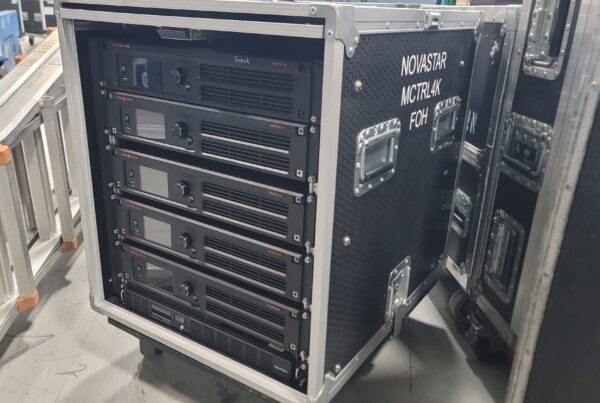
Crown I-Tech HD’s system health monitoring—accessible through System Architect software—provides continuous visibility of amplifier thermal state, output level, and protection activity across all channels. The festival system engineer monitors this data at a dedicated monitoring station, separate from the FOH mix position, throughout each performance day—a dedicated role whose sole function is infrastructure health management that prevents developing faults from becoming show failures.
The Guest Engineer Workflow: System Handoff and Return
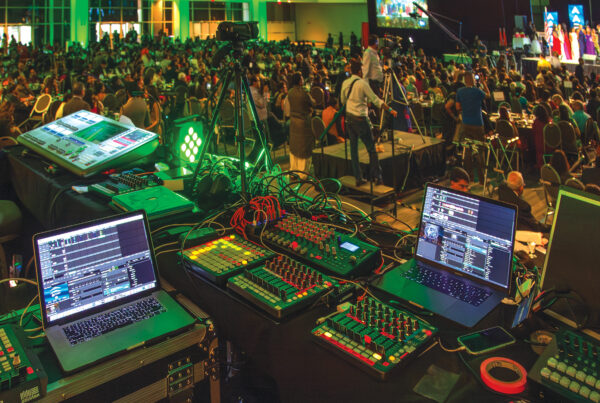
The guest engineer workflow at a major multi-day festival is one of the most operationally complex elements of festival audio production. Each visiting artist’s FOH engineer—potentially with zero prior experience with the specific system deployed at this festival—must be able to arrive at the FOH position, understand the system’s signal routing and processing architecture, and begin mixing in minutes rather than hours.
The system file documentation that the festival head system engineer provides to guest engineers is the operational tool that makes this rapid onboarding possible. A clear signal flow document—showing the routing from stage inputs through the mixing console to the system processor and amplifier outputs—and a processing map showing what equalization and dynamics processing the system processor applies by default enables experienced FOH engineers to integrate their mix approach with the system infrastructure confidently.
Console change protocols—the procedures for transitioning between back-to-back acts using different consoles at the FOH position—are a critical operational choreography at multi-act festivals. The transition from one act’s DiGiCo SD7 console to the next act’s Avid S6L requires a systematic procedure: muting the system outputs, patching the incoming console, verifying gain structure through the new signal path, and restoring system outputs—a sequence that must be completed within the 30–45 minute changeover window that festival schedules typically allow between headline acts. The system engineer who owns this procedure, and trains the festival audio crew to execute it reliably, is the invisible operational professional on whom the festival’s continuous audio delivery depends.
Sustainability Considerations in Multi-Day Festival Audio
The multi-day festival audio system is one of the most power-intensive elements of a large outdoor event, with combined amplifier power consumption for a major stage system approaching 200–400kW during peak operation. As festival organizers respond to growing sustainability imperatives, the power efficiency of audio system components has become a specification consideration alongside acoustic performance—a shift that is reshaping how system designers approach amplifier selection.
Crown I-Tech HD and Lab.gruppen PLM amplifiers both incorporate Class-D switching amplifier technology that achieves power efficiency above 80% at rated output—roughly double the efficiency of the Class-H linear amplifiers that preceded them. For a festival system drawing an average of 150kW during programming hours, this efficiency difference translates to approximately 75kW of generator capacity saved—a significant fuel and emissions reduction across a multi-day event.
D&b audiotechnik’s commitment to sustainability has produced system designs that meet the festival industry’s growing demand for lower environmental impact without acoustic performance compromise. The d&b KSL system’s amplifier efficiency optimization and the D80’s power factor correction circuitry both contribute to a system ecosystem that serves both the audio engineer’s performance requirements and the festival organizer’s sustainability objectives—an increasingly important alignment as major festivals establish binding emissions reduction targets that extend to their production supply chain.