Midday sun is the adversary that every outdoor production team eventually develops a healthy respect for. The hours between 10am and 3pm on a clear day present camera operators and directors of photography with the most technically demanding shooting conditions in live production — and managing them effectively is what separates footage that looks cinematic and intentional from footage that looks harsh, blown-out, and amateur.
The physics are straightforward and unforgiving. The sun at its zenith produces color temperatures between 5500K and 6500K depending on atmospheric conditions, delivering light intensity levels that can exceed 100,000 lux at the subject. Camera sensors — even the best large-format cinema sensors — have finite dynamic range that cannot simultaneously render a sunlit sky and a shadowed face without compromising one or the other. Every tool and technique in the outdoor midday production toolkit is, at its core, a form of contrast management.
The Dynamic Range Challenge
The luminance ratio in outdoor midday scenes — between the brightest highlight and the deepest shadow — routinely exceeds 16 stops. High-end cinema cameras like the ARRI Alexa 35, the Sony VENICE 2, and the RED MONSTRO 8K VV can capture up to 17 stops in their best-case configurations. Capable prosumer cameras — the Sony FX6, Canon EOS C70, Blackmagic Pocket Cinema Camera 6K Pro — work with narrower capture windows that make the exposure trade-off even more consequential.
The key decision in any outdoor midday shoot is where to place the exposure. Exposing for highlights preserves the upper luminance range but drops faces and shadow detail below usable levels. Exposing for skin tones blows out sky and bright backgrounds. There is no settings combination that eliminates this trade-off — there are only tools and techniques for managing how the compromise is made and what it costs you in the grade.
Neutral Density Filtration
The most fundamental tool for outdoor filming is the neutral density filter. ND filters reduce light reaching the sensor without altering color temperature, allowing the operator to maintain a cinematic 180-degree shutter angle and shallow depth-of-field even in extreme brightness. Without ND filtration, correct exposure in midday sun requires either closing to f/16 or smaller — which destroys depth-of-field control — or increasing shutter speed to values that produce unnaturally choppy motion rendering.
Variable ND systems like the Tiffen Variable ND, PolarPro Peter McKinnon Edition series, and built-in ND systems in the Sony FX9 and Canon EOS C300 Mark III allow rapid on-the-fly density adjustment as conditions change — essential in outdoor environments where cloud cover transitions can require a 3-stop adjustment in under a minute. For cinema-quality productions, IRND (Infrared Neutral Density) filters from Schneider Optics or Singh-Ray address the infrared contamination that cheaper ND solutions introduce at higher densities — contamination that produces a color cast visible in the grade.
Graduated Filters and Sky Management
When the primary challenge is a bright sky against a darker foreground — the standard outdoor event configuration — the graduated ND filter provides a targeted solution. A soft-edge grad applied to the upper frame darkens the sky by two to four stops while leaving the foreground unaffected, reducing overall scene contrast to a workable range without affecting the subject exposure.
Grad NDs require a matte box system to hold them in position. Professional matte boxes from Bright Tangerine, Vocas, and Chrosziel accept 4×5.65-inch filter formats that are the cinema production standard. On event coverage shoots where speed and mobility are priorities, clip-on filter systems that attach directly to the lens front offer faster deployment at some cost to positioning flexibility.
Color Temperature in Mixed Outdoor Environments
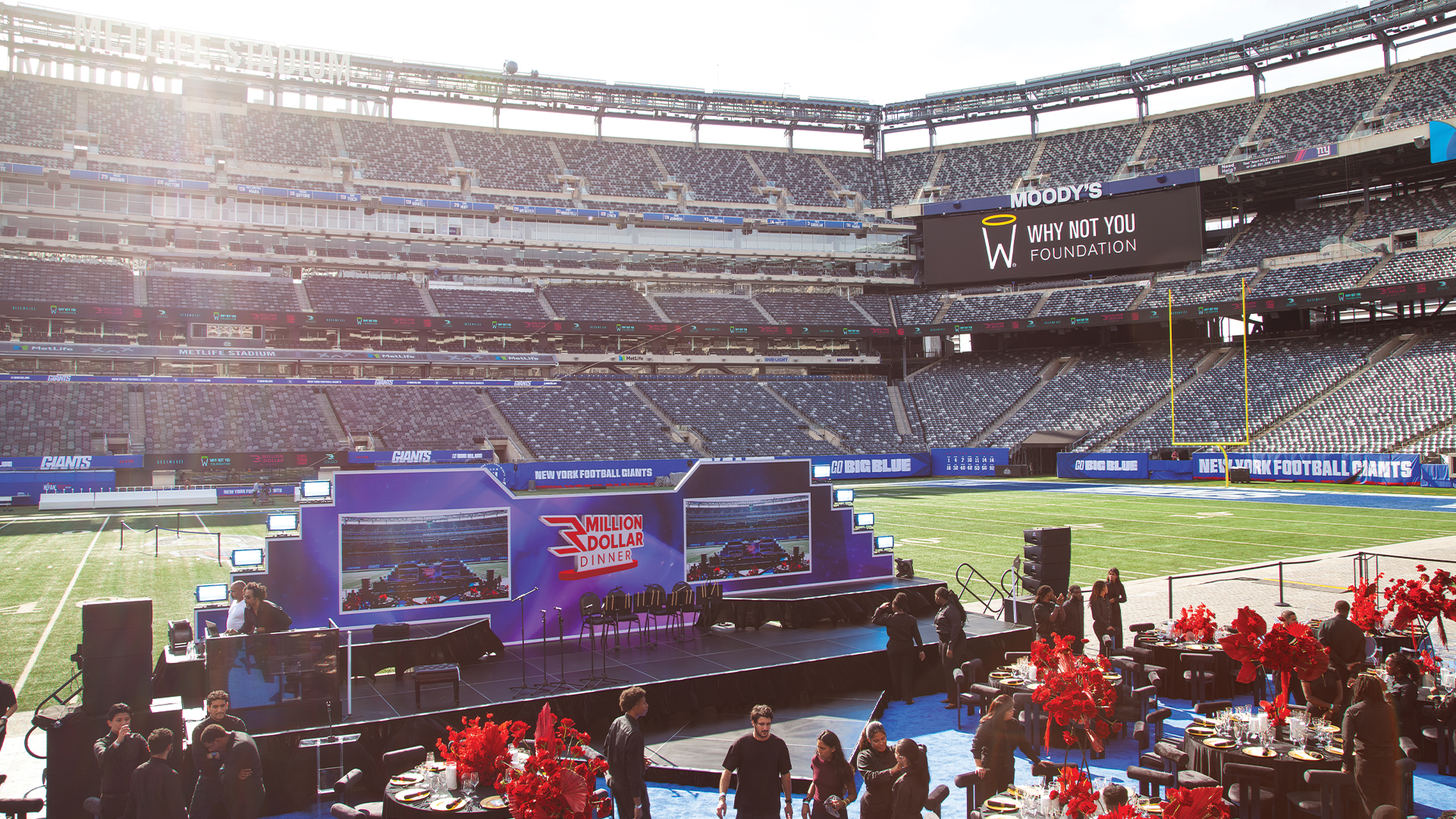
Midday sun’s color temperature presents a white balance challenge compounded on festival and outdoor event stages by the presence of artificial stage lighting. A camera balanced for the sun renders tungsten stage fixtures at 3200K as deep amber-orange. A camera balanced for the stage renders the sky as cold steel blue. In a mixed-light environment, there is no correct white balance — only a managed compromise.
The professional approach is to set a custom white balance that places the compromise where it is least visible on camera and most correctable in post. For broadcast and streaming content, this typically means balancing for D65 (6500K) as a reference point and relying on the colorist to make targeted corrections in DaVinci Resolve or Baselight. Shooting in a RAW or Log gamma format — S-Log3 on Sony, C-Log3 on Canon, BRAW on Blackmagic — provides the maximum color grading latitude to recover from mixed-light conditions. These formats are not optional on broadcast-destined outdoor production; they are operational requirements.
Lens Flare and Glare Control
Direct sun in or near the frame is the primary source of lens flare in outdoor shooting. Modern cinema lenses from Zeiss, Cooke, and Leica are engineered with sophisticated anti-reflective coatings that reduce flare significantly versus consumer glass — but no coating eliminates it entirely when the sun is in frame. A properly sized lens shade or matte box flag remains the practical solution.
On broadcast camera positions operating for eight or more continuous hours, a small lens umbrella attachment provides shade protection without requiring constant flag adjustment as the sun tracks across the sky. This detail is routinely overlooked in production planning and routinely produces visible flare in afternoon broadcast footage on outdoor events where it wasn’t addressed.
Monitor Hoods and Exposure Tools
One of the most overlooked practical challenges of outdoor midday shooting is the inability to accurately evaluate exposure on a camera monitor in direct sunlight. Even the brightest monitors — SmallHD 703 Bolt, Atomos Shogun 7, or Convergent Design Odyssey — are genuinely difficult to read in direct sun without a monitor hood. Visual exposure evaluation in bright conditions is inherently unreliable.
Professional camera operators in outdoor environments use waveform monitors and histogram displays as their primary exposure tools rather than visual evaluation. The waveform gives an objective luminance readout across the frame that is unaffected by ambient light on the monitor surface. False color exposure assist — available on most professional cameras and external recorders — provides an immediate visual overlay flagging overexposed and underexposed regions without requiring the operator to judge absolute monitor brightness.
Camera Placement and Strategic Shading
The most efficient solution to outdoor midday challenges is deliberate camera placement strategy. Cameras positioned to shoot into shade — under a stage overhang, in a shaded tent structure, or oriented so the sun is behind the subject — face fundamentally more manageable contrast ratios than those shooting in the open. Even a single primary camera position shifted to a shaded location can dramatically improve the quality ceiling of the entire shoot.
For events without creative control over camera placement — live festival coverage, news production, documentary formats — the combination of ND filtration, graduated NDs on sky-heavy compositions, Log gamma shooting, and waveform-based exposure discipline provides the most complete available toolkit for producing broadcast-quality footage in the most demanding natural lighting conditions professional camera operators regularly encounter. Midday sun rewards preparation and punishes improvisation — the productions that understand that reality in pre-production are the ones that deliver clean, gradable, professional footage regardless of what the sun does between 10am and 3pm.