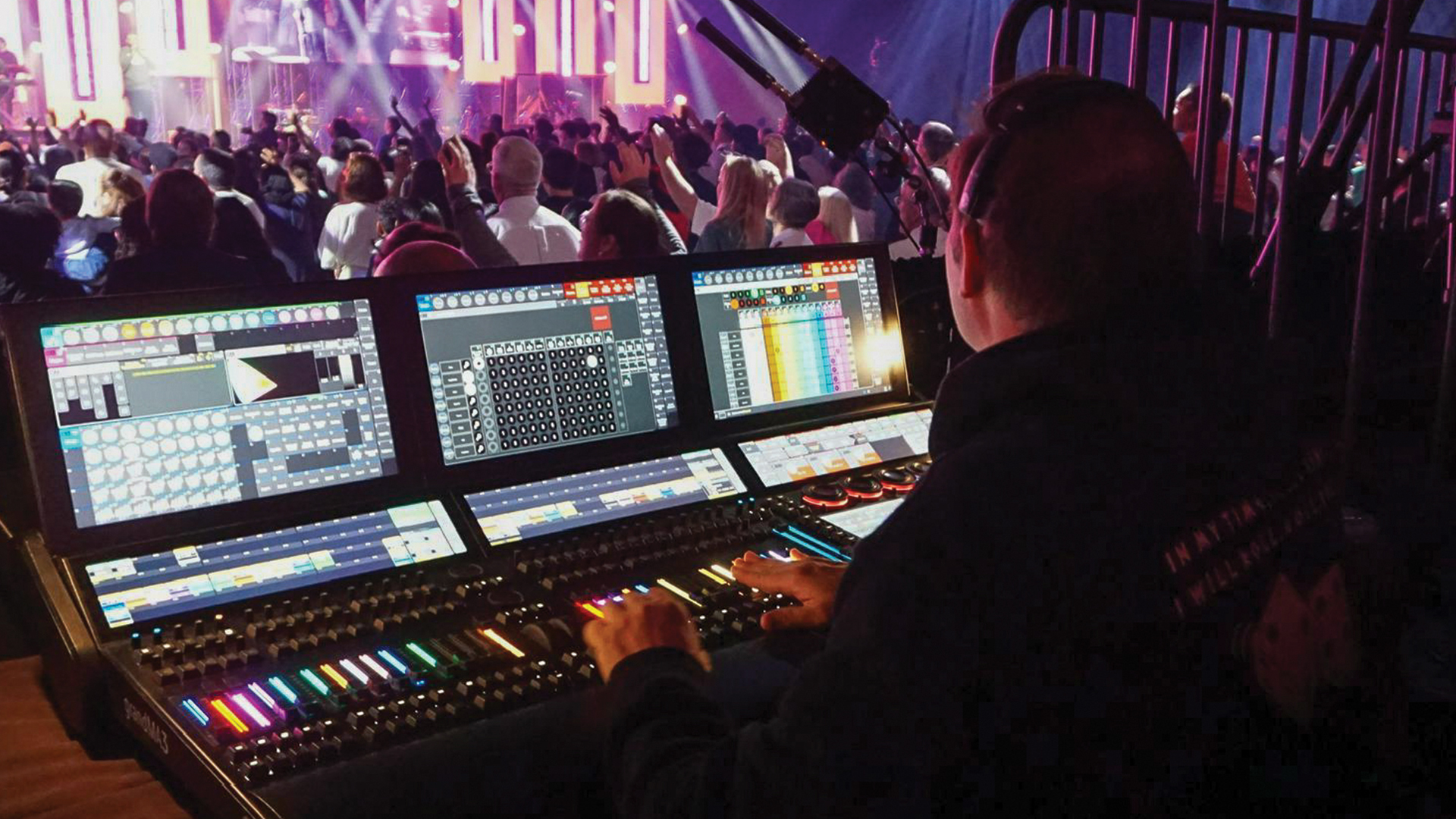
If there is a single piece of hardware that has achieved omnipresence at the upper tier of international festival production, it is the MA Lighting grandMA3. Walk behind the lighting position at Glastonbury, Lollapalooza, Ultra Miami, Primavera Sound, or Tomorrowland, and the chances are overwhelming that you will find a grandMA3 surface — or a network of them — orchestrating thousands of simultaneous moving light cues across multi-stage environments. This is not market dominance by accident. It is the result of two decades of methodical engineering evolution that has made the grandMA platform the de facto lingua franca of touring lighting.
The MA Legacy: Why Trust Compounds Over Generations
MA Lighting, founded in Waldorf, Germany in 1983, built its reputation on the grandMA1 — a console that brought object-oriented programming to lighting control in an era when most desks operated on simple channel-based architectures. The concept of programmable presets, attribute groups, and executor stacks was radical in the late 1990s. When the grandMA2 arrived in 2006, it absorbed lessons from thousands of touring rigs and introduced a network-native architecture that allowed multiple consoles to share universes, cuelists, and show files across a single gig.
That network philosophy — built around the MA-Net3 protocol — became the template for how large-scale festival lighting infrastructure would operate. Rather than one operator on one desk, festivals could deploy grandMA2 surfaces at FOH, on stage, at secondary monitor positions, and in production offices, all sharing a unified show file. The operational flexibility this created was transformative and generated a loyalty among top-tier lighting designers that persists into the grandMA3 era.
grandMA3: Architecture Built for Scale
Launched at Prolight + Sound 2018, the grandMA3 represented MA Lighting’s most ambitious hardware redesign in 15 years. The console introduced a fully parametric attribute-based engine that treats every function of every fixture as an addressable object — a departure from the universe-centric model that had defined the grandMA2. This means that in a festival scenario running 3,000 fixtures across four stages, the grandMA3 doesn’t think in terms of DMX addresses. It thinks in terms of fixture functions: intensity, position, colour, beam, effects.
The hardware itself underwent significant revision. The grandMA3 Full Size features 26 motorised faders, a 24-inch 4K touchscreen, and a dedicated MA Lighting xNode network interface capable of handling 256 universes of Art-Net, sACN, and MA-Net3 simultaneously. For festival infrastructure — where the cable runs from console to dimmer racks might traverse a kilometre of temporary power distribution — the reliability of the xNode’s optical connectivity has proven critical.
Real Festival Deployments: The Numbers Behind the Claim
The statistic of 500+ international festivals using grandMA3 consoles is not marketing abstraction. Christie Lites, one of North America’s largest lighting rental companies, reports the grandMA3 as its most frequently specified console for festival contracts, with utilisation rates exceeding 85% of premium touring inventory in peak summer season. PRG (Production Resource Group), operating globally, has built its festival lighting packages around grandMA3 as the primary surface since 2019.
At Coachella Valley Music and Arts Festival, production company Brite Ideas Entertainment deploys a network of grandMA3 consoles across five stages, with MA Lighting NPU (Network Processing Unit) nodes handling universe expansion to support over 2,500 intelligent fixtures simultaneously. The ability to share a single show file across all stage consoles — allowing the production LD to push updates to every stage operator in real time — has made multi-stage coordination achievable at a precision level that was simply impossible with previous generations of console architecture.
Programming Workflows That Define Modern Festival Lighting
The grandMA3’s MA 3D visualiser integration is perhaps its most operationally significant feature for festival production. Working months before a festival, lighting designers can build complete 3D models of stage environments, import manufacturer-accurate fixture profiles from the MA Lighting fixture library (containing 60,000+ entries), and programme complete shows in a virtual environment. When the rig lands on site, the show file loads, and the cuelist runs — sometimes without a single parameter change.
This pre-programming capability has dramatically compressed production timelines at festivals where changeover windows between artists are measured in minutes. Renowned lighting designer Patrick Woodroffe, whose career includes the Rolling Stones, Adele, and major global tours, has spoken extensively about the grandMA3’s cuelist architecture enabling complex multi-universe shows to be handed between touring LDs and festival operators without the traditional ‘translation’ work that used to consume hours of prep time.
The Network Infrastructure Powering 3,000-Fixture Shows
Behind the console surface, the grandMA3 ecosystem extends to an infrastructure layer that most audiences never see but production professionals spend weeks designing. MA Lighting grandMA3 nodes — including the 8Port Node 4K — distribute DMX universes across fibre and Cat6 networks with sub-millisecond latency, essential when timecode-triggered cues must land on musical downbeats at 140 BPM. The MA Lighting 4Port Node 2K handles smaller rig expansions, and the MA Network Switch provides the managed switching backbone that keeps the entire show network stable.
For festival productions running SMPTE timecode integration — where lighting cues are locked to audio playback or live broadcast timings — the grandMA3’s timecode engine has proven more reliable than competing platforms, according to system technicians who maintain festival rigs across extended residency events. In an environment where a missed cue during a broadcast segment can have commercial consequences, that reliability record drives repeat specifications season after season. The grandMA3 is not simply a popular console. It has become the load-bearing architecture of international festival lighting infrastructure.