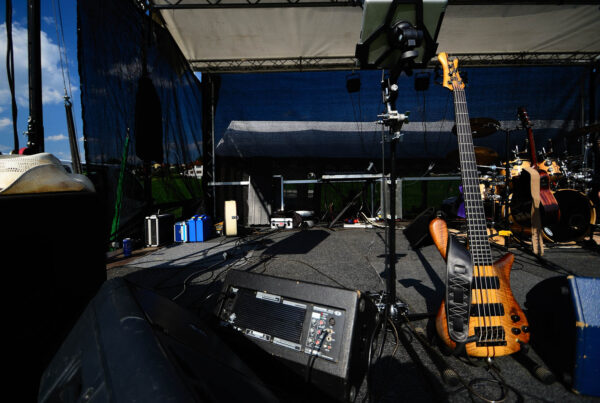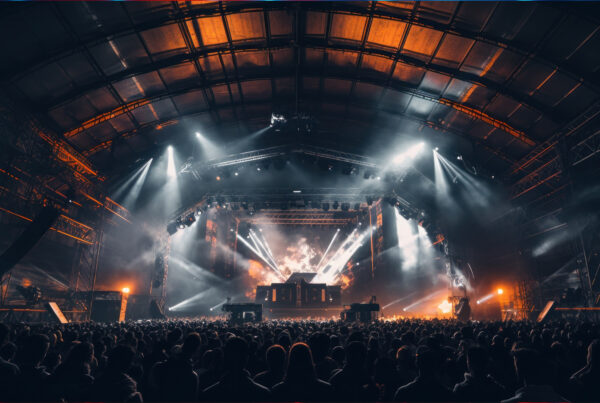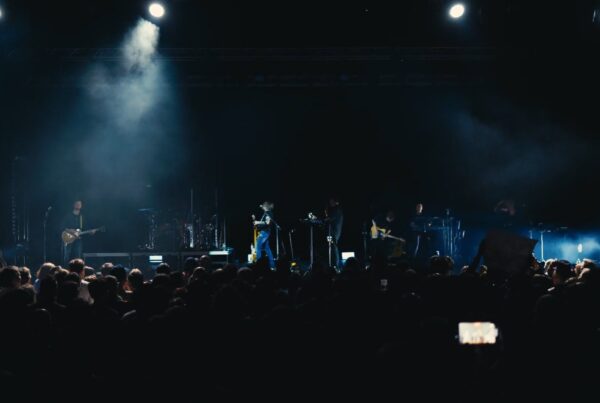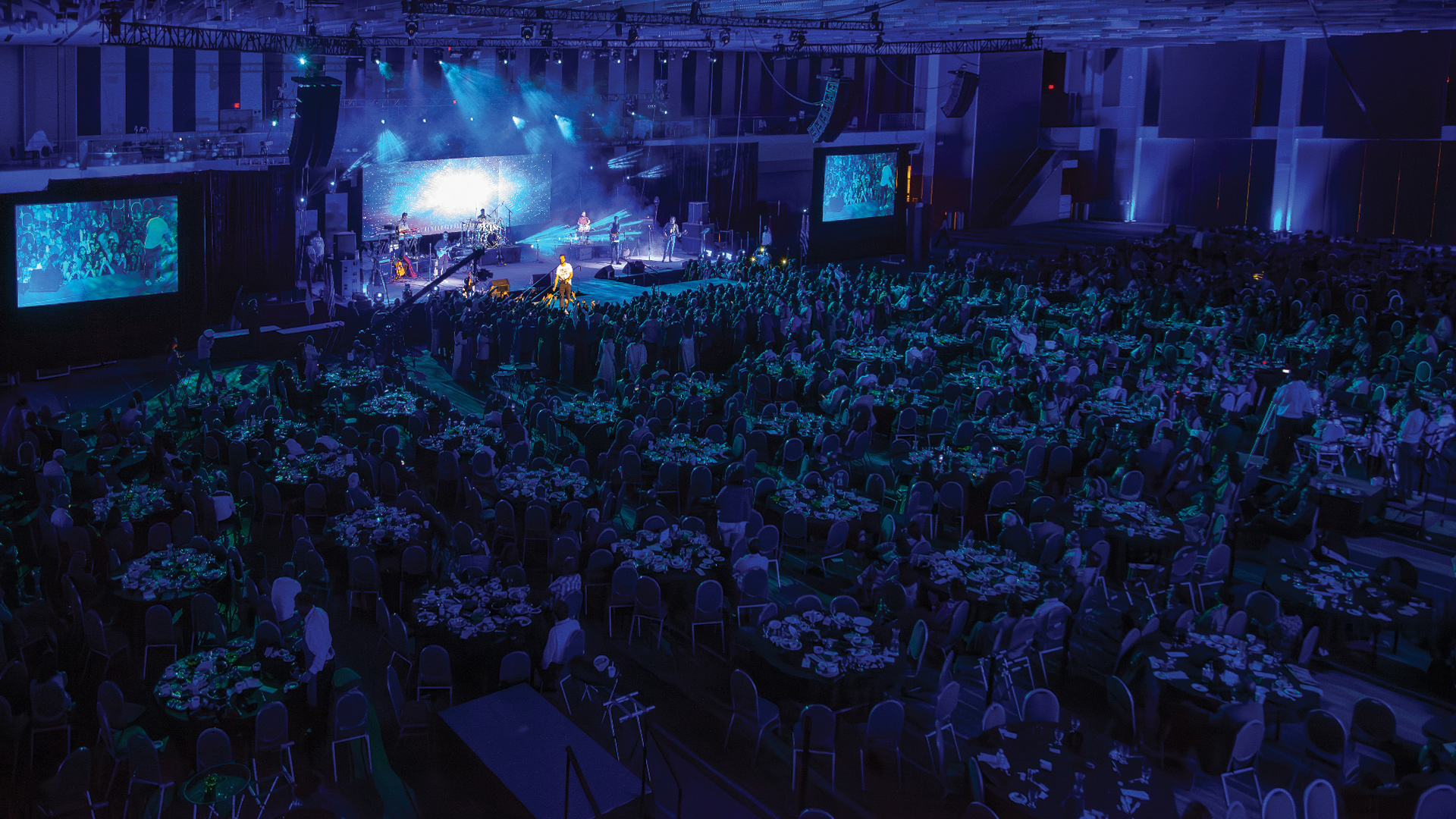
The 24-hour festival — a format built on continuous music across a day and night cycle without interruption — presents lighting production with a physiological and technical challenge that conventional event formats never face. Audiences transition from daylight to dusk to deep night to dawn across a single continuous production, and the visual environment must adapt to each atmospheric phase while maintaining the energy and immersion that keeps people dancing through 3 AM. Astera LED battery-powered fixtures, by eliminating the cable infrastructure that would normally require a complete production re-rig between outdoor daytime and indoor-equivalent night stages, have become the enabling technology for lighting designs that can evolve continuously across all 24 hours without a hard reset.
The 24-Hour Format: Awakenings, Mysteryland, and the Challenge
Awakenings Festival in the Netherlands — one of Europe’s premier techno events — runs 24-hour production across two days, with multiple stages operating simultaneously from noon to noon. Mysteryland, Nuits Sonores, and Sunburn Festival in India each deploy 24-hour or near-continuous production formats that expose their technical infrastructure to conditions ranging from 40°C midday heat to pre-dawn temperatures dropping into single digits. The lighting production for these events cannot rely on conventional wired infrastructure in the outdoor environments where stages are positioned — cable runs of 200+ meters to peripheral stage positions, exposed to weather, foot traffic, and the mechanical stress of repeated repositioning, represent an unacceptable failure risk across a 24-hour continuous production. Astera’s wireless battery system eliminates the most failure-prone elements of this infrastructure at exactly the locations where failure is hardest to remediate quickly.
Battery Science: Managing 24 Hours of Continuous Operation
The Astera Titan Tube’s 12-hour battery life at moderate output is not the same as 24-hour operation — but with systematic battery rotation protocols, a single fixture fleet can sustain production across a full 24-hour cycle. The discipline that experienced festival lighting crew apply to battery management on long-format events parallels the discipline applied to any consumable resource in long-duration production: fixture teams are divided into active deployment and charging rotation groups, with the AsteraApp battery management interface providing crew supervisors with real-time battery percentage data for every fixture in the network simultaneously. At Awakenings, where approximately 300 Titan Tubes and AX5 Trinity fixtures are deployed across the main stage and outdoor ambient environments, the charging rotation cycle involves pulling 25% of fixtures from their positions every three hours for a quick-charge cycle that restores 80% capacity in under two hours.
The Daylight Challenge: Battery Fixtures in Full Sun
Daytime festival production presents a different optical challenge to battery-powered LED fixtures than night production. The ambient luminance of direct sunlight — measured at 100,000 lux on a clear day — reduces even the brightest Astera Titan Tube to functional invisibility when used as an atmospheric fixture. The production response to this reality shapes the daytime visual strategy on 24-hour festival productions: Astera fixtures are repositioned for daytime use to positions where they provide visible foreground contrast — illuminating artist-level environments, creating color references in shaded areas, or functioning as practicals visible in the close-stage camera frame — rather than attempting to compete with daylight as atmospheric or aerial fixtures. As daylight diminishes through late afternoon, the same fixtures are repositioned to their nighttime atmospheric roles without any cable re-routing.
Multi-Stage Coordination: AsteraApp Network at Festival Scale
A 24-hour festival with four or five simultaneously operational stages creates a wireless RF management challenge that becomes critical when each stage’s Astera network must function without interference from adjacent networks. The Astera App wireless protocol’s 4,096-fixture addressing capacity and its network segmentation features allow separate stage productions to operate independent wireless networks within the same festival site footprint. On sites where RF interference has been an observed problem — dense urban festival locations where the 2.4 GHz spectrum is congested with existing wireless infrastructure — Astera’s frequency hopping protocol automatically identifies and avoids congested channels, maintaining reliable data transmission even in severely crowded RF environments. The RF site survey conducted during production advance — identifying interference sources and pre-configuring network channel assignments for each stage — is now a standard deliverable from lighting companies working on multi-stage festival productions.
Environmental Performance: Astera in Rain, Dew, and Humidity
A 24-hour outdoor festival inevitably encounters weather conditions that test the environmental sealing of any equipment operating continuously through a full day-night cycle. Astera rates its current generation of touring fixtures to IP65 — fully dust-tight and protected against water jets from any direction — which is the minimum specification for outdoor festival use in northern European and coastal climates where overnight dew and morning rainfall are routine. Post-event failure analysis conducted by major Astera rental partners including Litecom and Stage One following multiple festival seasons consistently documents fixture failure rates below 0.5% per event, even in events that include significant precipitation — a reliability figure that has made Astera battery fixtures the default choice for environmental and aerial positions on outdoor festival stages.
Creative Possibilities: The Night Transition as Production Set Piece
The most creatively distinctive application of battery-powered wireless LED technology on 24-hour festivals is the production treatment of the daylight-to-darkness transition — the 45-minute window around sunset during which the visual character of the outdoor festival environment undergoes its most dramatic change. Lighting designers who have embraced this transition as a production set piece — rather than treating it as a logistical problem — have created some of festival lighting’s most memorable moments. At Tomorrowland 2022, a lighting design incorporating 400 Astera Titan Tubes arranged across the main stage infrastructure was programmed to progressively activate over the 45-minute sunset period, each tube illuminating incrementally as the ambient light level dropped, so that the entire installation appeared to grow organically from the fading sky. The sequence required no manual intervention — it ran on a grandMA3 timecode-driven cuelist timed to the local astronomical sunset for that specific date.
The Post-24-Hour Recovery: What the Fixtures Tell the Crew
The AsteraApp post-event diagnostic data — accessible immediately after the show ends — provides a detailed technical record of each fixture’s performance across the 24-hour production: run time hours, battery cycles used, temperature peaks, and any error conditions that were logged during operation. This data, exported to production reports and shared with the rental company’s technical management, builds the operational history of each fixture unit across its rental lifetime. Fleet managers at major Astera rental companies use this data to make preventive maintenance decisions — identifying fixtures that are approaching battery replacement thresholds or showing elevated operating temperatures before those issues manifest as failures during a show. The discipline of data-driven equipment management that this enables is a significant advance over the traditional approach of discovering equipment problems only when they fail during production.