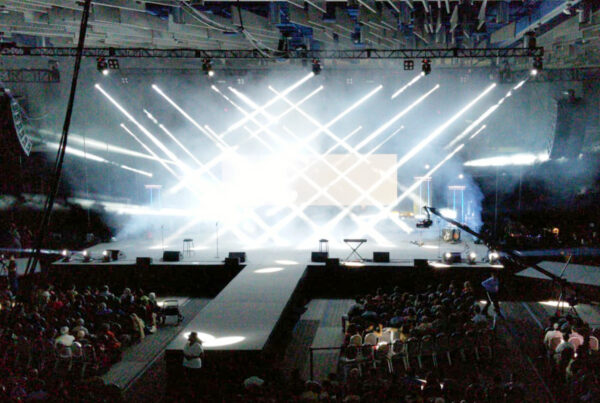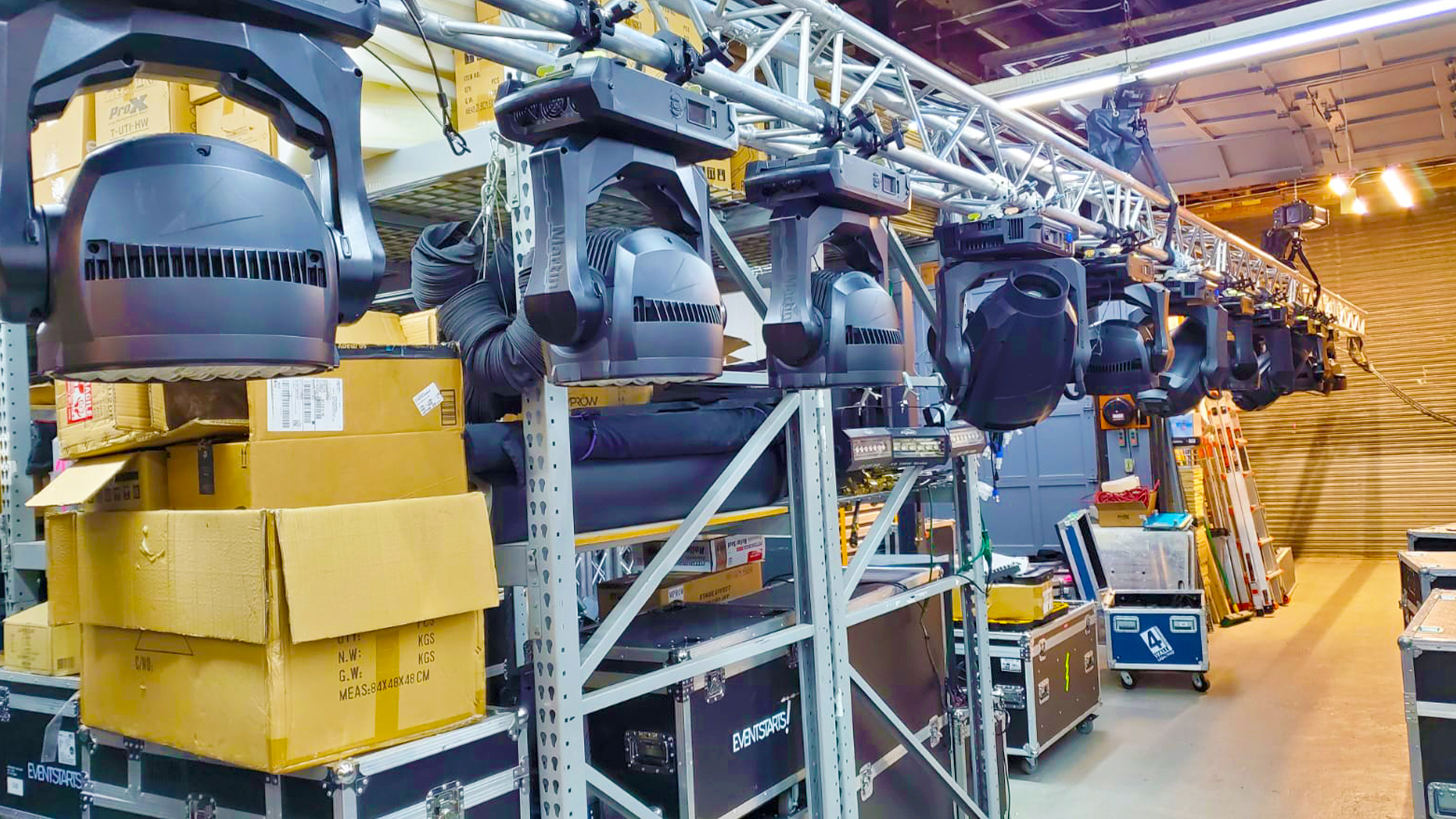
A rigging plot is a technical document. It is also, in the most direct sense, a contract between the production team and the laws of physics — a formal declaration of what will be suspended in the air, where it will hang, how much it will weigh, and what structural elements will support it. In an industry where the consequences of rigging failure are measured in collapsed structures, injured crew members, and destroyed equipment, the rigging plot is the single most important safety document in live event production. Its creation, review, and execution must be treated with the gravity commensurate with the life-safety responsibility it carries.
What a Rigging Plot Contains
A complete rigging plot documents every structural element in the aerial production environment. At minimum, it includes:
- Hoist positions — exact coordinates of every chain hoist in the XY plane of the venue, referenced to architectural features or survey benchmarks
- Bridle points — all locations where loads are distributed across multiple attachment points, with rigging hardware specifications and calculated leg tensions
- Payload schedules — itemized lists of every element hanging from each hoist or rigging point, with individually verified weights
- Total loads — calculated total hanging weight at each structural attachment point in the venue’s roof or ceiling grid
- Dynamic load factors — multipliers applied to static weights to account for hoist acceleration forces and vibration loading from moving elements
- Hardware specifications — shackle sizes, wire rope diameter, chain hoist model and capacity, beam clamp ratings
- Clearances — minimum distances between hanging elements and audience areas, emergency exit routes, and adjacent structural elements
The Load Calculation Process
Rigging load calculations require the application of statics and structural mechanics principles to determine the forces imposed on each support point. A skilled rigger uses rigging calculation software — CAST Software’s Braceworks within Vectorworks Spotlight, AutoCAD-based rigging tools, or dedicated load calculation spreadsheets vetted by structural engineers — to compute not just the total weight at each point but the three-dimensional force vectors that determine actual hardware stress levels.
The bridle angle is a critical variable that many non-engineers underestimate. As two-leg bridle angles increase beyond 60 degrees from vertical, leg tensions increase dramatically — a 120-degree included angle generates leg tensions equal to the total load weight per leg, effectively doubling the load on each attachment point compared to a vertical hoist. Rigging professionals use bridle tension calculators or the OSHA sling angle chart as standard references, but experienced riggers have internalized these relationships as professional intuition built over years of practice.
Structural Assessment: Trusting the Venue’s Ceiling
A rigging plot that documents production loads with precision is only as valuable as the structural assessment of the venue’s capacity to accept those loads. Venue structural assessments — performed by licensed structural engineers reviewing the building’s original design documents, steel grades, connection details, and any modifications made since original construction — determine the safe hanging load limit at each potential rigging point. This information is sometimes provided by the venue as a rigging capacity chart; in other cases, particularly in older facilities, it must be established through engineering investigation before any rigging attachment is made.
The production industry’s major professional organization, PLASA (formerly the Professional Lighting and Sound Association), and its technical standards body have published ANSI E1.2 — the standard for theatrical rigging systems — along with supplementary technical guidance that addresses both permanent and temporary rigging installations. The Entertainment Services and Technology Association (ESTA) technical standards program provides the framework within which responsible production rigging operates in North America.
The Head Rigger’s Role and Responsibility
The head rigger is the individual responsible for the safety and integrity of every element in the aerial environment. This is not a delegatable role. The head rigger reviews and signs off on the rigging plot, oversees all rigging installation activities, makes real-time decisions about load adjustments and point placement when field conditions differ from the plot, and maintains authority to halt any rigging operation that presents safety concerns — regardless of schedule pressure.
Professional head riggers hold certifications from recognized bodies including ETCP (Entertainment Technician Certification Program) — specifically the ETCP Certified Rigger: Theatre or ETCP Certified Rigger: Arena certifications, which require demonstrated knowledge, supervised experience hours, and passage of comprehensive written examinations. An ETCP-certified head rigger on the production is not merely a best practice — on many high-profile shows and in many venue contracts, it is a contractual requirement
When Things Change: The Importance of Plot Revisions
Live production is a dynamic environment. Set designs evolve, client requirements change, LED wall configurations get upgraded two weeks before the show — and every one of these changes has potential structural implications that must flow back through the rigging plot. A rigorous change management process for the rigging plot — with version control, dated revisions, and structural re-verification for any load change exceeding 10% of the calculated value — is the professional standard. A rigging plot that was accurate at the time of structural sign-off but hasn’t been updated to reflect 48 hours of production changes is not a safety document; it is a liability waiting to materialize.
The rigging plot, ultimately, is the physical expression of the production team’s responsibility to everyone in the building. To the crew working at height. To the technicians working under the hanging loads. To the audience trusting that the spectacular aerial environment overhead was designed, calculated, and installed by professionals who took that trust seriously. In the live event industry, the rigging plot is where professionalism and safety converge — and its quality is a direct reflection of the standards the production company holds itself to.