Bass is the body of a sound system. It is felt before it is heard, and when it fails — when the left floor section rumbles at 115 dB while the upper tier barely perceives 90 dB — the entire event experience fractures. Subwoofer placement strategy in large arenas is one of the most technically demanding disciplines in professional audio, requiring acoustic physics, mathematics, and hard-won empirical knowledge to execute at the level audiences now expect.
The Physics of Low-Frequency Distribution
Sound at sub-100 Hz frequencies behaves fundamentally differently from mid and high-frequency content. Wavelengths at 40 Hz measure approximately 8.5 meters — longer than most speaker rigging points — which means the energy propagates in all directions simultaneously and is nearly impossible to contain or steer using conventional directional techniques. Cardioid subwoofer arrays, first systematically documented by audio engineer Bob McCarthy in his landmark text *Sound Systems: Design and Optimization*, exploit the interference patterns between multiple subwoofer cabinets to achieve a controlled, rear-attenuated radiation pattern. This technique, now standard on major tours, reduces rear-stage low-frequency bleed by 15 to 20 dB — a figure that matters enormously in arenas where the stage crew, monitors engineers, and broadcast positions occupy the space directly behind the system.
End-Fire Arrays: The Touring Standard
The end-fire subwoofer array — a horizontal line of subwoofer cabinets each delayed relative to the one behind it by a time offset calculated from their physical spacing — is the workhorse technique for floor-level deployment in arenas. The mathematics, rooted in constructive interference principles, create a forward-aimed lobe of low-frequency energy that projects into the audience while canceling to the rear. d&b audiotechnik J-Sub and KS28 cabinets deployed in end-fire configurations have become the de facto standard on tier-one arena tours, with typical configurations running 12 to 24 cabinets per side in arrays that stretch up to 6 meters across the front-of-house floor. JBL VTX S28 and L-Acoustics KS28 arrays compete for the same territory, each with manufacturer-specific DSP tools — JBL HiQnet Performance Manager and L-Acoustics Soundvision — that model the predicted coverage before a single cabinet is loaded into the truck.
Distributed Sub Systems: Solving the Upper Tier Problem
The front-of-house sub stack, however powerful, cannot efficiently serve the upper tiers of a 20,000-seat arena without distance-related SPL loss and comb filtering from reflections off the arena bowl. Distributed subwoofer systems — compact sub cabinets flown on delay towers or integrated into the house’s permanent rigging infrastructure — address this gap by bringing the low-frequency source closer to the distant audience zones. Meyer Sound 750-LFC long-throw subwoofers have appeared on permanent installations in venues like Madison Square Garden and the O2 Arena precisely because their output bandwidth and processing power allow them to supplement the main arrays without creating the group delay misalignment that would otherwise muddy the bass across zones. The DSP delay alignment between the floor arrays and the distributed subs — typically managed in d&b R1 software or L-Acoustics Network Manager — is measured in milliseconds and verified with SMAART or Rational Acoustics room analysis software.
Infra-Sub Ground Coupling: The Ground Stack Legacy
Before rigging and array technology reached current levels of sophistication, the ground-coupled sub stack was the dominant format for arena low-end: massive cabinets stacked directly on the floor or stage surface, exploiting boundary loading — the 6 dB SPL gain that occurs when a speaker operates adjacent to a reflective surface — to extract maximum output from limited cabinet counts. Acts like AC/DC, Metallica, and U2 built their legendary arena and stadium bass on ground-stack architectures that reached 140+ dB at the mix position. Today’s production engineers often deliberately retain some ground-stack element alongside flown arrays precisely because the tactile low-frequency energy — the feeling of bass through the floor — cannot be fully replicated by a flown system. Danley Sound Labs TH-118 and SH-50 enclosures appear regularly in hybrid ground-plus-flown configurations on major festival stages.
Prediction Software: Designing Before Deployment
No arena subwoofer system in the professional tier is designed by ear alone. EASE (Enhanced Acoustic Simulator for Engineers) and AFMG EASE Focus allow system designers to import full arena geometry — including seating manifolds, reflective surfaces, and rigging infrastructure — and simulate the predicted SPL distribution of any proposed subwoofer configuration before load-in begins. L-Acoustics Soundvision and d&b ArrayCalc provide manufacturer-specific prediction tools optimized for their respective cabinet geometries. The output of these simulations — isobar maps showing SPL variance across the entire venue footprint — is used to optimize cabinet positioning, delay values, and array geometry to target a maximum ±3 dB variance across all audience positions. Achieving that target in a 20,000-seat bowl with a complex ceiling structure is the engineering equivalent of threading a needle.
Real-World Results: The 2023 Stadium Residency Standard
The industry benchmark shifted measurably after Beyoncé’s Renaissance World Tour in 2023, where production audio team — headed by FOH engineer Brian Garber and system engineer Pete Keppler — deployed a cardioid end-fire array of 48 d&b J-Sub cabinets per side combined with distributed V-Sub elements flown at every delay position in each stadium. Post-show SMAART analysis logs, discussed at the InfoComm and NAMM post-tour sessions, showed a measured variance of under ±2.5 dB at 60 Hz across seating zones from front pit to the last row of the upper bowl — a figure that several veteran system engineers publicly described as the tightest low-frequency coverage ever measured on a stadium tour at that scale.
The Human Element: What Measurement Cannot Capture
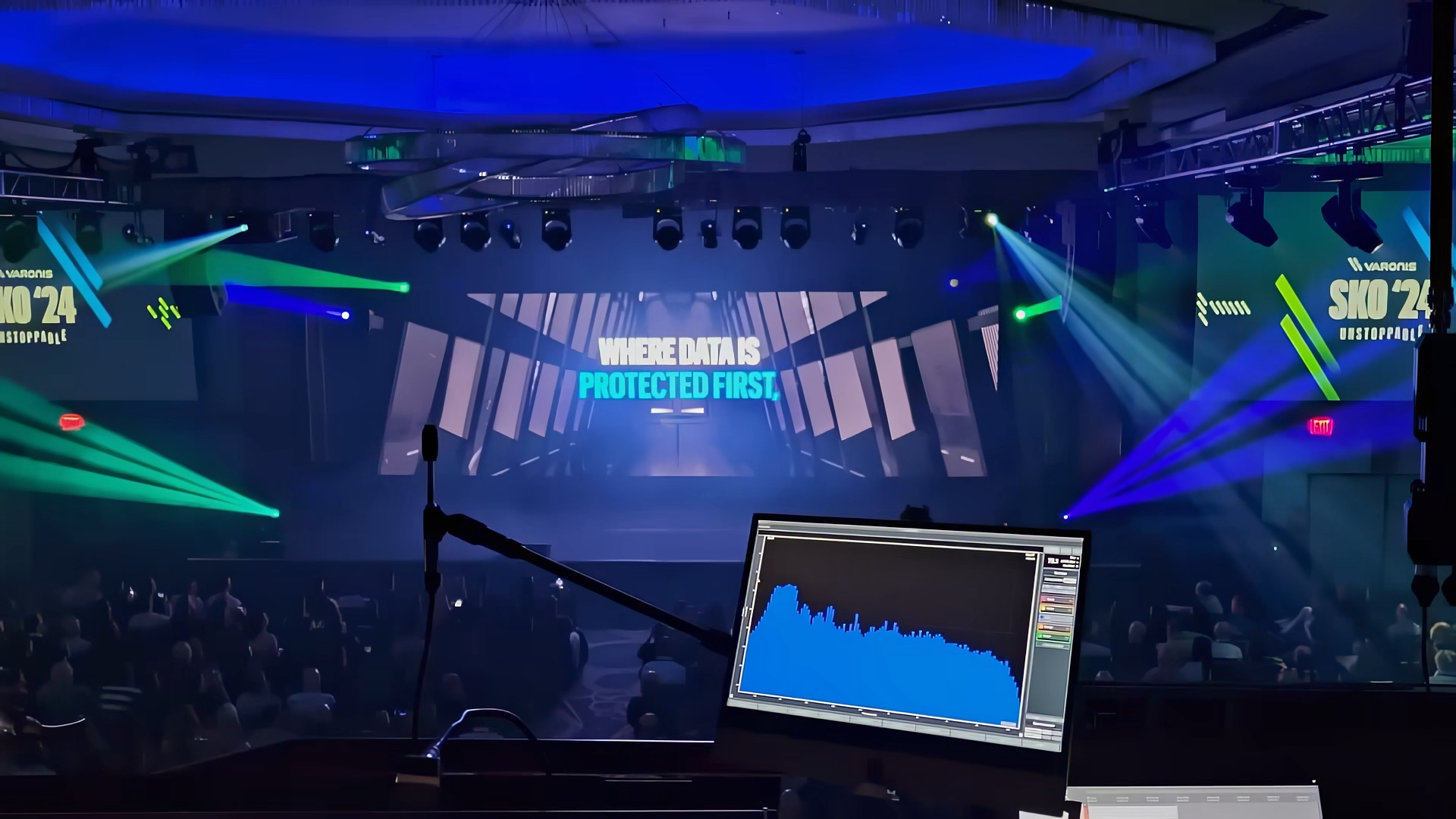
Ultimately, subwoofer placement in large arenas remains as much a craft as a science. The relationship between prediction software output and real-world acoustic behavior is mediated by dozens of variables — audience absorption, HVAC system noise floors, structural resonances — that no model fully anticipates. The engineers who produce consistently great arena bass combine deep technical rigor with thousands of hours of listening experience, and they trust their ears alongside their analyzers. The Rational Acoustics SMAART spectrum, the Yamaha QL5 system interface, and the Lake LM 26 processing engine are the tools; the knowledge of when to override a model prediction and move a cabinet six inches to the left based on intuition shaped by experience — that is the craft.
AV Production Insights | Professional Series