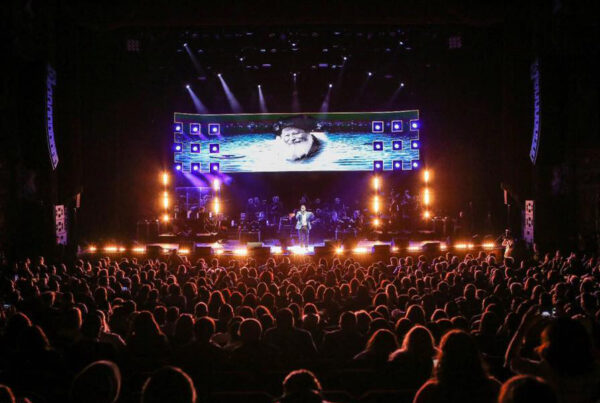
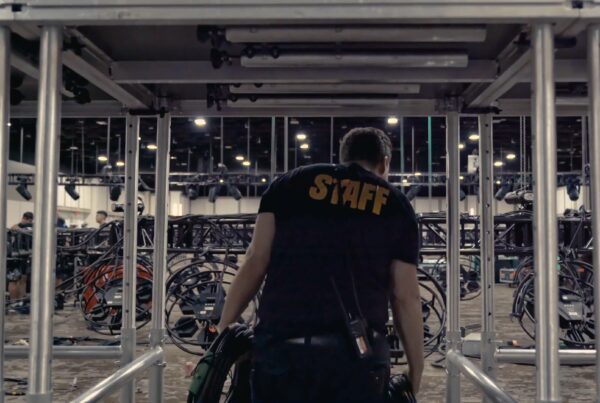
A touring PA system is one of the most punished pieces of industrial equipment on earth. In a single calendar year, a headline tour PA — typically owned by a major production company like Clair Global, Tait, or Solotech — may travel 60,000 kilometres by truck, aircraft, and sea freight, be deployed and struck in 40 cities, withstand ambient temperatures ranging from -5°C in Scandinavia to 48°C in the Middle East, absorb the mechanical shock of trailer loading ramps, and perform to within a fraction of a decibel of its factory specification every single night. That it does so reliably is a testament to three manufacturers who have, between them, come to define the touring sound reinforcement landscape: JBL Professional, d&b audiotechnik, and L-Acoustics.
JBL: The Foundation of Modern Touring Sound
JBL’s history in touring production is as old as touring production itself. James B. Lansing founded the original Lansing Manufacturing Company in 1927, and the JBL Professional brand has been supplying concert sound since the era of Grateful Dead PA systems in the late 1960s. The modern JBL VTX Series — particularly the VTX A12 and VTX A8 line array elements — represents the culmination of nearly a century of transducer engineering, combining JBL’s proprietary Differential Drive woofer technology with a 2408H-2 HF compression driver that sustains output at sustained sound pressure levels that would destroy competitive components within months. VTX A12 cabinets have flown at NFL Super Bowl halftime shows, toured with global pop artists grossing over a billion dollars in box office, and covered audiences across venues from Tokyo Dome to Madison Square Garden. JBL’s Crown I-Tech HD amplifiers power these systems with DriveCore technology, offering onboard DSP, network control via HiQnet, and efficiency ratings that reduce generator fuel consumption on outdoor tours by a measurable percentage.
d&b audiotechnik: German Precision on the Road
Founded in Straubenhardt, Germany in 1981 by industrial designer Harmut Frenzel and electroacoustics engineer Jochen Sommer, d&b audiotechnik built its touring reputation on a single philosophical commitment: the amplifier and the cabinet are a system, not separate products. The d&b J-Series — deploying J8, J12, and J-SUB elements — established what the industry calls a system-integrated approach, where the amplifier’s DSP contains factory-optimised filter sets specifically tuned to the physical properties of its partnered enclosure. On a touring rig, this means that a d&b J-Series PA reassembled after a 6,000-kilometre flight to Johannesburg will perform to the same measured response as it did three weeks earlier in Hamburg, without field recalibration. The d&b SL-Series and V-Series extend this philosophy to arena and club touring respectively, and d&b’s Soundscape object-based mixing system — running on the DS100 Signal Engine and fully integrated with DiGiCo Quantum and Avid VENUE consoles — has been adopted by residency productions at venues including London’s O2 Arena and Las Vegas Sphere.
L-Acoustics: The Architecture of Coverage
L-Acoustics entered the touring market in 1992 with the invention of the V-DOSC system, the world’s first commercially successful constant-curvature line array. Before V-DOSC, concert PA was physically assembled from stacks of point-source cabinets that created inconsistent coverage across different seating zones. V-DOSC’s waveguide geometry, developed by Christian Heil and patented in 1992, produced a coherent cylindrical wave that maintained consistent SPL from the front of the crowd to the back — a discovery so significant that virtually every line array cabinet manufactured since 1995 traces its acoustic architecture to Heil’s patent. The modern K1 and K2 touring systems carry this legacy into a world of 24-bit digital amplification, self-powered cabinets using LA-RAK II touring racks, and L-Acoustics Soundvision 3D acoustic modelling software used by system engineers on every major world tour to predict coverage before a single cabinet is flown. On a 60,000-kilometre world tour, L-Acoustics’ self-powered approach removes one complete trailer-load of external amplifier racks from the road, reducing both logistics cost and carbon footprint in a production environment where sustainability is an increasingly visible commercial consideration.
The Economics and Logistics of Global Touring
Moving 60,000 kilometres of PA infrastructure involves logistics networks of extraordinary complexity. Production managers on global tours use RFID asset tracking embedded in flight cases to monitor cabinet location in real time across multiple continents. Custom-built ISO-certified flight cases from Rönisch Koffer and Sweetbox protect cabinets against the mechanical shock of air freight handling, which exerts forces on equipment that no truck ride produces. Insurance coverage for a headline touring PA system — typically 400 to 600 cabinets with a replacement value exceeding five million dollars — requires condition reports filed at every load-in, with production engineers photographing and logging any cabinet that arrives with transit damage. The fact that JBL, d&b, and L-Acoustics systems survive these journeys intact is not accidental: all three manufacturers engineer their products to IEC 60268 vibration and shock standards, and all three publish mean-time-between-failure data validated by independent testing at facilities including the Institute of Sound and Vibration Research at the University of Southampton.